
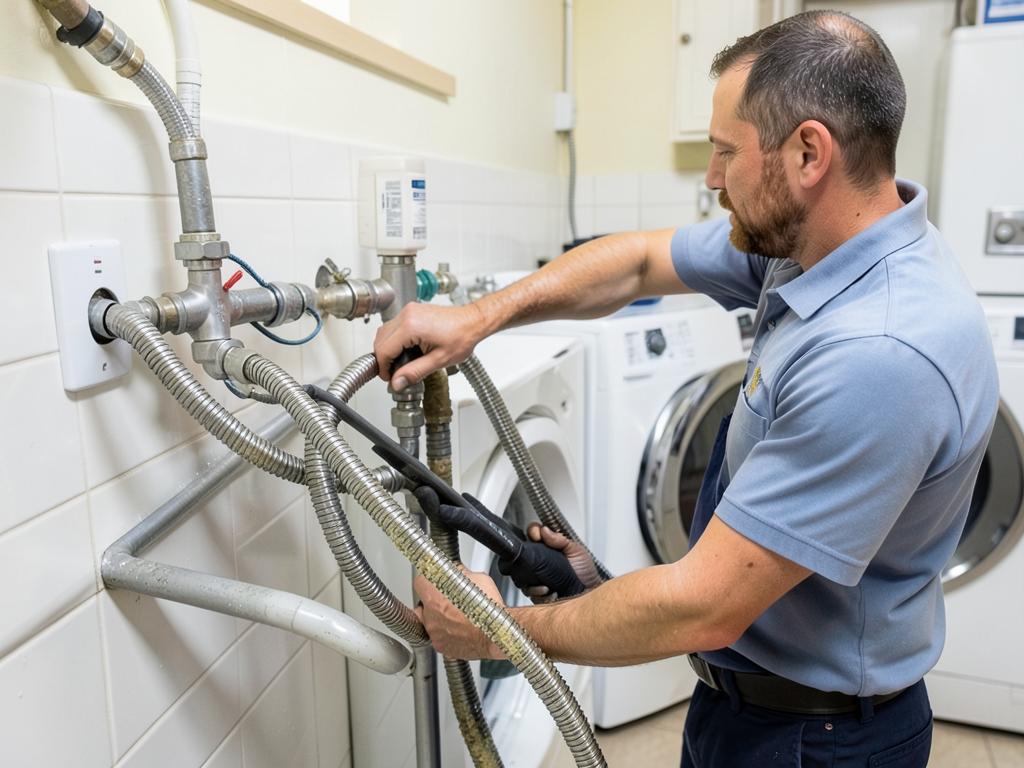
Why Your Creve Coeur Washing Machine Hoses Might Be a Ticking Time Bomb
Living in Creve Coeur means enjoying tree-lined streets and established neighborhoods. But many homes here hide a dangerous secret behind their laundry room walls. Standard rubber washing machine hoses can burst without warning sending hundreds of gallons of water flooding through your home. The combination of St. Louis hard water and aging rubber creates the perfect storm for sudden catastrophic failure. This is not a distant possibility. It is a real threat that strikes Creve Coeur homes every year. How to Get Your St. Louis Home Insurance to Actually Pay for Water Damage.
The Hidden Danger in Your Laundry Room
Most homeowners never think about their washing machine hoses until water is pouring across their basement floor. The standard rubber hoses that come with new machines have a typical lifespan of just three to five years. In Creve Coeur where water hardness often exceeds 200 parts per million mineral content those rubber hoses degrade even faster. The constant pressure cycling as your machine fills and drains creates microscopic cracks that grow over time. You cannot see these cracks until the hose splits wide open. Professional Water Extraction and Drying for St. Charles Residents.
Picture this scenario. You leave for work on a Tuesday morning. Your washing machine is mid-cycle. A rubber hose that has been slowly deteriorating for months finally gives way. Water pressure at 60 PSI blasts through the split. Within minutes your laundry room floor is underwater. Within an hour water has seeped into your basement walls and ruined your drywall. This happens to Creve Coeur homeowners more often than you think. Water Damage Restoration Manchester.
5 Proactive Steps to Prevent Washing Machine Leaks
- Replace Rubber Hoses Immediately
Standard rubber hoses are the weakest link in your laundry system. Replace them with reinforced stainless steel braided hoses. These cost about $25 to $40 per hose and last 10 to 15 years. The braided steel exterior prevents the catastrophic splitting that rubber hoses experience.
- Install Automatic Shut-off Valves
Devices like FloodStop monitor water flow to your washing machine. If they detect an unusual flow pattern indicating a burst hose they automatically shut off the water supply. Installation takes about 30 minutes and provides 24/7 protection. Who to Call When Your Pipes Burst in Kirkwood This Winter.
- Use a Drip Pan Under Your Machine
A simple plastic or metal drip pan costs $15 to $30 and catches minor leaks before they become major floods. Make sure the pan has a drain connection to direct water to a floor drain or utility sink.
- Level Your Washing Machine
An unlevel machine vibrates excessively during spin cycles. This vibration causes hoses to rub against walls or other surfaces creating wear points. Use a level to ensure your machine sits perfectly flat and adjust the feet as needed.
- Install Smart Water Sensors
Modern Wi-Fi water sensors cost $30 to $60 each. Place them near your washing machine and connect them to your smartphone. You get instant alerts when moisture is detected allowing you to respond before major damage occurs.
1. Upgrade to Braided Stainless Steel Hoses
Standard rubber washing machine hoses fail because the rubber degrades from constant water pressure temperature changes and mineral buildup. Stainless steel braided hoses solve these problems. The outer braided steel jacket protects the inner rubber hose from physical damage and UV exposure. These hoses can handle water pressure up to 1500 PSI compared to 150 PSI for standard rubber.
Installation is straightforward. Turn off the water supply at the wall valves. Disconnect the old hoses. Connect the new stainless steel hoses hand-tight then give them a quarter turn with a wrench. Do not overtighten. Check for leaks by running a test cycle with the machine empty. The investment of $50 to $80 for both hot and cold hoses pays for itself the first time it prevents a flood.
2. Install an Automatic Water Shut-off Valve
Automatic shut-off valves represent the next level of protection. These devices install between your wall valves and washing machine hoses. They contain sensors that monitor water flow patterns. During normal operation water flows intermittently as your machine fills and drains. If a hose bursts water flows continuously at full pressure. The sensor detects this abnormal pattern within seconds and closes a motorized valve stopping the water flow.
Popular models like FloodStop include a battery backup ensuring protection during power outages. Some units connect to your home Wi-Fi sending alerts to your smartphone when they activate. Professional installation costs $150 to $250 but DIY installation is possible if you are comfortable with basic plumbing. The peace of mind these devices provide is invaluable especially for second-floor laundry rooms common in Creve Coeur townhomes.
3. Use a Leak Tray or Drip Pan
Even with new hoses a leak tray provides cheap insurance. These shallow pans sit under your washing machine catching water from slow leaks hose drips or minor overflows. Look for pans at least two inches deep with a front lip low enough for your machine to roll over easily. Many pans include a threaded drain connection allowing you to pipe excess water to a nearby floor drain.
Installation requires sliding the pan under your machine. This works best with front-loading machines that sit on pedestals. For top-loaders you may need to lift the machine slightly using wood blocks. Once positioned the pan remains invisible but provides crucial protection. If you ever notice water in the pan investigate immediately. Small leaks grow into big problems quickly.
The Impact of St. Louis Hard Water on Your Appliances
Creve Coeur sits in an area with some of the hardest water in Missouri. Water hardness measures dissolved calcium and magnesium minerals. St. Louis water often tests at 180 to 250 parts per million. This mineral content creates several problems for washing machine hoses and internal components.
Hard water minerals accumulate inside rubber hoses creating rough surfaces that accelerate degradation. The minerals also build up on valve seats and seals causing them to stick or fail prematurely. You may notice white crusty deposits around hose connections. This is calcium carbonate and it indicates significant internal buildup.
The constant expansion and contraction of rubber hoses as water temperature changes causes these mineral deposits to flake off creating abrasive particles. These particles wear down valve seals from the inside out. Within three to five years the combination of mineral buildup physical wear and age causes catastrophic failure. Stainless steel braided hoses resist this mineral damage because the steel jacket protects the inner hose.
What to Do if Your St. Louis Home Suffers Water Damage
Despite your best prevention efforts sometimes leaks happen. When they do quick action minimizes damage. First shut off the water supply immediately. The valve is usually behind your washing machine or at your main water shutoff. Next remove standing water with towels mops or a wet vacuum. Do not wait for water to evaporate. It seeps into flooring walls and subfloors causing warping mold and structural damage.
Call a professional water damage restoration company right away. In Creve Coeur you need help within two to four hours to prevent secondary damage. Look for IICRC certified technicians who understand local building materials and moisture patterns. They use industrial dehumidifiers air movers and moisture meters to dry your home completely. Partial drying leaves hidden moisture that causes mold growth within 24 to 48 hours. IICRC Certification Standards.
Document everything for your insurance claim. Take photos of all damaged areas before cleanup begins. Keep receipts for emergency services and repairs. Most homeowner policies cover sudden water damage from appliance failures. But they may not cover secondary damage from delayed response. Quick professional help protects both your home and your insurance coverage. EPA WaterSense Program.
Professional Water Damage Restoration Services in St. Louis
When prevention fails you need rapid professional response. Patriot Water Damage Restoration St. Louis provides 24/7 emergency service throughout Creve Coeur and surrounding areas. Our certified technicians arrive within two hours of your call. We use commercial grade extraction equipment to remove standing water then deploy industrial dehumidifiers to eliminate hidden moisture.. Read more about The Hidden Dangers of a Leaky Water Heater in Your Fenton Utility Room.
We understand Creve Coeur homes from historic properties near Old Bonhomme to newer constructions in West County. Our team knows how local building materials respond to water damage. We handle everything from initial water extraction through final repairs. We work directly with your insurance company to streamline the claims process. Removing Mold from Historic Central West End Homes Without Damaging the Architecture.
Water damage waits for no one. If you experience a washing machine leak or any other water emergency call (314) 428-9977 immediately. Our phones are answered 24 hours a day seven days a week. Quick action saves your home and your possessions.
Local Building Code Considerations for Laundry Rooms
St. Louis County building codes require specific protections for laundry room installations. Washing machine drain pans must be at least 1.5 inches deep and extend at least 2 inches beyond the machine footprint. For second-floor installations an overflow drain connection to the home’s drainage system is mandatory. This prevents a leaking pan from spilling onto floors below.
Local plumbing codes also require accessible shut-off valves within 6 feet of the washing machine. These valves must be clearly labeled and operable without tools. For homes with finished basements many inspectors now recommend installing a floor drain in the laundry room. This provides an escape route for minor leaks before they cause major damage.
Commercial properties and multi-family buildings in Creve Coeur face even stricter requirements. Many newer townhome developments require individual water shut-off valves for each unit’s laundry connections. Some buildings install central water monitoring systems that alert building management to unusual water usage patterns indicating potential leaks.
Seasonal Maintenance Tips for Creve Coeur Homeowners
St. Louis weather creates seasonal challenges for washing machine installations. Summer humidity levels often exceed 80 percent. This moisture in the air accelerates rubber degradation and promotes mold growth around laundry areas. Run a dehumidifier in your laundry room during summer months to reduce ambient moisture.
Winter brings freeze-thaw cycles that affect your home’s plumbing. When temperatures drop below freezing open cabinet doors near washing machine connections to allow warm air circulation. Consider installing pipe insulation on exposed water lines. Even in finished basements pipes near exterior walls can freeze causing pressure buildup that stresses hose connections.
Spring and fall are ideal times for preventive maintenance. Check all hose connections for signs of corrosion mineral buildup or moisture. Test your automatic shut-off valve by running a small amount of water through it. Clean your washing machine’s drain pump filter to prevent backups that could cause overflow. These simple tasks take less than an hour but prevent days of water damage cleanup.
Cost Comparison: Prevention vs. Restoration
| Item | Prevention Cost | Restoration Cost | Potential Savings |
|---|---|---|---|
| Stainless Steel Hoses | $50 – $80 | $3,000 – $8,000 | $2,950 – $7,920 |
| Automatic Shut-off Valve | $150 – $250 | $5,000 – $15,000 | $4,850 – $14,750 |
| Leak Sensors | $60 – $120 | $2,000 – $5,000 | $1,940 – $4,880 |
| Annual Maintenance | $100 – $200 | $10,000 – $25,000 | $9,800 – $24,800 |
The numbers tell a clear story. Prevention costs a few hundred dollars while restoration costs thousands. A single burst hose can destroy flooring cabinetry and personal possessions. The average insurance claim for washing machine water damage exceeds $6,000. Many claims get denied due to lack of maintenance or delayed response. Prevention is not just smart. It is financially essential.
Frequently Asked Questions
How often should I replace washing machine hoses?
Replace standard rubber hoses every three to five years. Replace stainless steel braided hoses every 10 to 15 years. Check hoses annually for signs of bulging cracking or corrosion. If you notice any damage replace them immediately regardless of age.
Can I install an automatic shut-off valve myself?
DIY installation is possible if you are comfortable with basic plumbing. Turn off your home’s main water supply. Disconnect the existing hoses. Install the shut-off valve according to manufacturer instructions. Test thoroughly for leaks. If you are unsure call a professional plumber.
Does homeowner insurance cover washing machine leaks?
Most policies cover sudden accidental water damage from appliance failures. They typically do not cover damage from lack of maintenance or gradual leaks. Some policies exclude second-floor laundry room damage or require specific endorsements. Check your policy details and ask your agent about coverage limitations.
What are signs my washing machine hoses are failing?
Look for bulging or blistering on the hose surface. Check for white crusty mineral deposits around connections. Feel for soft spots when the hoses are under pressure. Listen for hissing sounds indicating small leaks. Any of these signs means immediate replacement is necessary.
How much does professional water damage restoration cost?
Costs vary based on damage extent. A small laundry room flood might cost $1,500 to $3,000. Extensive damage affecting multiple rooms can exceed $10,000. Most companies offer free inspections and work directly with insurance companies to minimize your out-of-pocket expenses.
You may also find this helpful. Should You Throw Away Your Carpet After Water Damage or Can an Olivette Pro Save It?.
You may also find this helpful. Is It Actually Safe to Sleep in Your House While It Is Drying Out After a Leak?.
{
“@context”: “https://schema.org”,
“@type”: “BlogPosting”,
“headline”: “Why Your Creve Coeur Washing Machine Hoses Might Be a Ticking Time Bomb”,
“description”: “Washing machine hoses in Creve Coeur homes can fail catastrophically. Learn why St. Louis hard water and aging rubber hoses create a flood risk and what to do now.”,
“wordCount”: 2171,
“datePublished”: “2026-03-27T12:53:00.000Z”,
“dateModified”: “2026-03-27T12:53:00.000Z”,
“inLanguage”: “en-US”,
“mainEntityOfPage”: {
“@type”: “WebPage”,
“@id”: “https://patriotwaterdamagerestorationstlouis.com”
},
“publisher”: {
“@type”: “LocalBusiness”,
“name”: “Patriot Water Damage Restoration St. Louis”,
“url”: “https://patriotwaterdamagerestorationstlouis.com”
},
“author”: {
“@type”: “Organization”,
“name”: “Patriot Water Damage Restoration St. Louis”,
“url”: “https://patriotwaterdamagerestorationstlouis.com”
},
“image”: {
“@type”: “ImageObject”,
“url”: “https://patriotwaterdamagerestorationstlouis.com/wp-content/uploads/2026/03/why-your-creve-coeur-washing-machine-hoses-might-b-1.png”
}
}
{
“@context”: “https://schema.org”,
“@type”: “LocalBusiness”,
“name”: “Patriot Water Damage Restoration St. Louis”,
“url”: “https://patriotwaterdamagerestorationstlouis.com”,
“address”: {
“@type”: “PostalAddress”,
“addressLocality”: “St. Louis”
},
“areaServed”: {
“@type”: “City”,
“name”: “St. Louis”
}
}
{
“@context”: “https://schema.org”,
“@type”: “FAQPage”,
“mainEntity”: [
{
“@type”: “Question”,
“name”: “How often should I replace washing machine hoses?”,
“acceptedAnswer”: {
“@type”: “Answer”,
“text”: “Replace standard rubber hoses every three to five years. Replace stainless steel braided hoses every 10 to 15 years. Check hoses annually for signs of bulging cracking or corrosion. If you notice any damage replace them immediately regardless of age.”
}
},
{
“@type”: “Question”,
“name”: “Can I install an automatic shut-off valve myself?”,
“acceptedAnswer”: {
“@type”: “Answer”,
“text”: “DIY installation is possible if you are comfortable with basic plumbing. Turn off your home’s main water supply. Disconnect the existing hoses. Install the shut-off valve according to manufacturer instructions. Test thoroughly for leaks. If you are unsure call a professional plumber.”
}
},
{
“@type”: “Question”,
“name”: “Does homeowner insurance cover washing machine leaks?”,
“acceptedAnswer”: {
“@type”: “Answer”,
“text”: “Most policies cover sudden accidental water damage from appliance failures. They typically do not cover damage from lack of maintenance or gradual leaks. Some policies exclude second-floor laundry room damage or require specific endorsements. Check your policy details and ask your agent about coverage limitations.”
}
},
{
“@type”: “Question”,
“name”: “What are signs my washing machine hoses are failing?”,
“acceptedAnswer”: {
“@type”: “Answer”,
“text”: “Look for bulging or blistering on the hose surface. Check for white crusty mineral deposits around connections. Feel for soft spots when the hoses are under pressure. Listen for hissing sounds indicating small leaks. Any of these signs means immediate replacement is necessary.”
}
},
{
“@type”: “Question”,
“name”: “How much does professional water damage restoration cost?”,
“acceptedAnswer”: {
“@type”: “Answer”,
“text”: “Costs vary based on damage extent. A small laundry room flood might cost $1,500 to $3,000. Extensive damage affecting multiple rooms can exceed $10,000. Most companies offer free inspections and work directly with insurance companies to minimize your out-of-pocket expenses.”
}
}
]
}
{
“@context”: “https://schema.org”,
“@type”: “HowTo”,
“name”: “Prevent Washing Machine Leaks”,
“step”: [
{
“@type”: “HowToStep”,
“position”: 1,
“name”: “Replace Rubber Hoses Immediately”,
“text”: “Standard rubber hoses are the weakest link in your laundry system. Replace them with reinforced stainless steel braided hoses. These cost about $25 to $40 per hose and last 10 to 15 years. The braided steel exterior prevents the catastrophic splitting that rubber hoses experience.”
},
{
“@type”: “HowToStep”,
“position”: 2,
“name”: “Install Automatic Shut-off Valves”,
“text”: “Devices like FloodStop monitor water flow to your washing machine. If they detect an unusual flow pattern indicating a burst hose they automatically shut off the water supply. Installation takes about 30 minutes and provides 24/7 protection. Who to Call When Your Pipes Burst in Kirkwood This Winter.”
},
{
“@type”: “HowToStep”,
“position”: 3,
“name”: “Use a Drip Pan Under Your Machine”,
“text”: “A simple plastic or metal drip pan costs $15 to $30 and catches minor leaks before they become major floods. Make sure the pan has a drain connection to direct water to a floor drain or utility sink.”
},
{
“@type”: “HowToStep”,
“position”: 4,
“name”: “Level Your Washing Machine”,
“text”: “An unlevel machine vibrates excessively during spin cycles. This vibration causes hoses to rub against walls or other surfaces creating wear points. Use a level to ensure your machine sits perfectly flat and adjust the feet as needed.”
},
{
“@type”: “HowToStep”,
“position”: 5,
“name”: “Install Smart Water Sensors”,
“text”: “Modern Wi-Fi water sensors cost $30 to $60 each. Place them near your washing machine and connect them to your smartphone. You get instant alerts when moisture is detected allowing you to respond before major damage occurs.”
}
],
“image”: “https://patriotwaterdamagerestorationstlouis.com/wp-content/uploads/2026/03/why-your-creve-coeur-washing-machine-hoses-might-b-1.png”
}
{
“@context”: “https://schema.org”,
“@type”: “BreadcrumbList”,
“itemListElement”: [
{
“@type”: “ListItem”,
“position”: 1,
“name”: “Home”,
“item”: “https://patriotwaterdamagerestorationstlouis.com”
},
{
“@type”: “ListItem”,
“position”: 2,
“name”: “Blog”,
“item”: “https://patriotwaterdamagerestorationstlouis.com/blog”
},
{
“@type”: “ListItem”,
“position”: 3,
“name”: “Why Your Creve Coeur Washing Machine Hoses Might Be a Ticking Time Bomb”
}
]
}
{
“@context”: “https://schema.org”,
“@type”: “Service”,
“serviceType”: “Water Damage Restoration”,
“provider”: {
“@type”: “LocalBusiness”,
“name”: “Patriot Water Damage Restoration St. Louis”,
“url”: “https://patriotwaterdamagerestorationstlouis.com”
},
“areaServed”: {
“@type”: “City”,
“name”: “St. Louis”
},
“description”: “Washing machine hoses in Creve Coeur homes can fail catastrophically. Learn why St. Louis hard water and aging rubber hoses create a flood risk and what to do now.”
}