
A Safety Checklist for Moving Your Family Back Home After a Major Flood
Before you step back into your home after a major flood in St. Louis you need to know it is safe. Water damage can hide serious dangers like electrical hazards structural instability and toxic mold. This checklist will help you protect your family and identify when you need professional help. We have served the St. Louis metro area for over 15 years and understand the unique risks our region faces from the Mississippi and Missouri rivers. How to Get Your St. Louis Home Insurance to Actually Pay for Water Damage.
Immediate Safety Hazards to Check First
Before entering any flooded home the first 24 hours are critical for safety. Floodwaters can compromise electrical systems gas lines and structural elements in ways that are not immediately visible. Professional Water Extraction and Drying for St. Charles Residents.
Electrical System Hazards
Water and electricity create a deadly combination. Even if power is out at the main panel components may still hold charge. Look for these warning signs: Water Damage Restoration Manchester.
- Visible water around electrical panels outlets or switches
- Burned or melted insulation on wiring
- Flickering lights when power is restored
St. Louis homes built before 1970 often have outdated wiring that becomes brittle when wet. If you see any of these signs do not touch anything. Call Ameren Missouri at (800) 552-7583 to have them shut off power to your home. Ameren Missouri.
Gas Line Safety
Flooding can shift foundations and break gas line connections. The rotten egg smell of natural gas is a clear warning. If you detect this odor leave immediately and call Spire Energy at (800) 887-4173 from outside the home.
Older St. Louis neighborhoods like Soulard and Tower Grove have many homes with original gas lines that may corrode when exposed to floodwaters. Even a small leak can create an explosion risk.. Read more about The Dangers of Standing Water Near Your Electrical Panel in a Marine Villa Basement.
Structural Integrity Warning Signs
Missouri clay soil expands when wet putting enormous pressure on foundation walls. Look for these indicators of structural compromise:
- New cracks in foundation walls wider than 1/8 inch
- Doors or windows that suddenly stick or won’t close
- Bulging or bowing foundation walls
- Sagging ceilings or floors
The freeze-thaw cycles common in St. Louis winters can make flood damage worse by expanding cracks. If you notice any of these signs do not enter the home. Call a structural engineer for an assessment.

Diagram showing how hydrostatic pressure from saturated clay soil pushes against foundation walls during flooding.
The Post-Flood Home Inspection Checklist
Once you have addressed immediate hazards you can begin a systematic inspection. Use this checklist to document damage for insurance and identify safety concerns.. Read more about Why You Should Inspect the Drywall in Your Patch Neighborhood Mudroom After a Storm.
Foundation and Basement Assessment
St. Louis basements are particularly vulnerable due to our high water table and clay soil. Check for:
- Water marks on walls showing flood height
- Efflorescence (white powdery deposits) indicating mineral seepage
- Floor cracks or heaving
- Sump pump failure or overflow
Efflorescence is a Golden Nugget sign that many homeowners miss. It means water has been moving through your foundation for some time even if you haven’t seen standing water. Efflorescence on Concrete.
Mold Risk Hotspots
St. Louis humidity (often over 70%) means mold can start growing within 24-48 hours after flooding. Focus on these areas:
- Behind baseboards and trim
- Inside wall cavities
- Under flooring especially carpet and padding
- Inside HVAC ducts
The musty odor of active mold growth is unmistakable. If you smell it you have a problem that needs professional remediation.
HVAC System Contamination
Your heating and cooling system can spread contaminants throughout your home. Check for:
- Water in the furnace or air handler
- Ductwork with standing water or mud
- Damaged insulation around ducts
Category 3 water (sewage or floodwater) contamination requires professional cleaning according to IICRC S500 standards. Do not attempt to clean this yourself.
Moisture Mapping with a Hygrometer
A moisture meter is your best friend for finding hidden water damage. Test these surfaces:
- Baseboards at multiple points
- Wall studs inside wall cavities
- Concrete floors for moisture wicking
Readings above 16% on wood or 4% on concrete indicate active moisture that needs drying. This is a diagnostic test that proves whether materials are truly dry or just appear so.
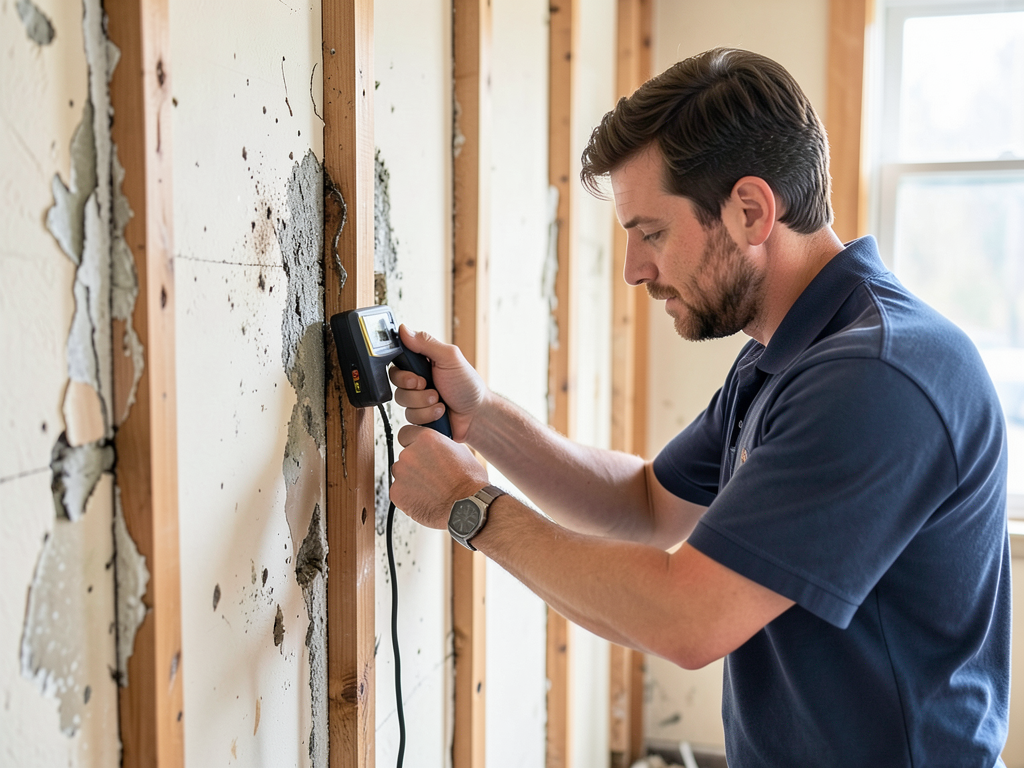
Technician using a moisture meter to check wall studs for hidden water damage after flooding.
St. Louis Building Code and Permit Requirements
St. Louis County requires permits for many flood repairs. The St. Louis County Department of Public Health oversees permits for structural repairs and mold remediation. EPA Mold Guidelines.
For homes in historic districts like Lafayette Square you must also comply with the St. Louis Preservation Board guidelines. This means using approved materials and techniques that match the original construction. Removing Mold from Historic Central West End Homes Without Damaging the Architecture.
MSD (Metropolitan St. Louis Sewer District) regulations require backflow preventers in areas prone to sewer backup. If your home flooded from sewer water you may need to upgrade your plumbing to meet current codes.
According to the 2021 International Residential Code Section R322 homes in flood hazard areas must use flood-resistant materials below the base flood elevation. This includes pressure-treated lumber and closed-cell foam insulation.
Professional vs DIY Safety Assessment
Some flood damage requires professional equipment and expertise. Use this guide to decide when to call in experts.
| Damage Type | DIY Safe | Professional Required |
|---|---|---|
| Clean water from broken pipe | Yes if under 10 sq ft | Large areas or Category 3 water |
| Structural cracks | No | Engineer assessment |
| Mold growth | Small patches under 10 sq ft | Large areas or toxic mold |
| Electrical damage | No | Always professional |
Professional inspection includes thermal imaging to find hidden moisture in walls and thermal bridges where heat escapes. This technology can save thousands in future repairs by finding problems early.
Insurance Documentation for St. Louis Homeowners
Documenting flood damage properly can make the difference between a paid claim and a denial. Here is what you need:
- Time stamped photos of all damage before cleanup
- Moisture meter readings showing affected areas
- Professional inspection reports
- MSD flood reports if applicable
Missouri requires insurance companies to respond to claims within 30 days. Keep copies of all communication and never sign anything without understanding the terms.
For FEMA assistance in declared disaster areas you will need to show that you have documented damage and attempted to mitigate further loss. This means starting the drying process quickly to prevent mold growth.
Health and Safety Precautions During Cleanup
Floodwaters can contain sewage chemicals and biological hazards. Protect yourself with:
- N95 respirator mask
- Waterproof gloves and boots
- Eye protection
- Protective clothing
The Missouri Department of Health and Senior Services recommends discarding porous materials that contacted floodwater including carpet padding and drywall. These cannot be effectively sanitized.
St. Louis humidity means drying times are longer than in drier climates. Use dehumidifiers and fans to accelerate the process. Materials should be dried to below 16% moisture content before rebuilding.
When to Call a Professional
Call (314) 428-9977 if you experience any of these situations:
- Suspected structural damage
- Category 3 water contamination
- Large mold growth areas
- Electrical system exposure to water
- Insurance claim documentation needs
Professional restoration teams use industrial dehumidifiers air movers and HEPA filtration to dry and clean your home safely. They also provide documentation that insurance companies require.
St. Louis homes in flood prone areas like those near the Meramec River or in the floodplain need extra attention. Our team understands the local soil conditions building codes and insurance requirements.
Industrial drying equipment setup in a flooded St. Louis basement showing air movers and dehumidifiers.
Frequently Asked Questions
How long after a flood is it safe to return home?
Only return when authorities declare it safe and you have completed the electrical and structural safety checks. This is typically 24-72 hours after floodwaters recede but can take longer depending on damage extent.
Can I clean up flood damage myself?
You can handle small clean water spills under 10 square feet. Anything larger or involving contaminated water requires professional equipment and training to ensure safety and prevent mold growth.
What building permits do I need for flood repairs in St. Louis?
St. Louis County requires permits for structural repairs electrical work and mold remediation. Contact the Department of Public Health for specific requirements in your area.
How do I know if my home has hidden water damage?
Use a moisture meter to test walls floors and ceilings. Readings above 16% on wood or 4% on concrete indicate active moisture. Professional thermal imaging can find hidden problems inside walls.
Will my insurance cover flood damage?
Standard homeowners insurance does not cover flood damage. You need separate flood insurance through the National Flood Insurance Program or private insurers. Check your policy for sewer backup coverage.
Take Action Now to Protect Your Family
Flood damage does not wait and neither should you. Every hour that passes increases the risk of mold growth structural damage and health hazards. If you are unsure about any aspect of your home’s safety call (314) 428-9977 for a professional assessment.
Our team serves St. Louis communities including Manchester Creve Coeur and surrounding areas. We understand the unique challenges of our region from clay soil expansion to high humidity and we have the equipment and expertise to restore your home safely.
Do not risk your family’s health or your home’s value. Call (314) 428-9977 today to schedule your post flood safety inspection. We will help you determine what is safe what needs repair and how to protect your home from future flooding.
Pick up the phone and call (314) 428-9977 before the next storm hits. Your family’s safety cannot wait.
You may also find this helpful. Keeping Your Pets Safe and Stress-Free While a Water Restoration Crew is in Your Home.
{
“@context”: “https://schema.org”,
“@type”: “BlogPosting”,
“headline”: “A Safety Checklist for Moving Your Family Back Home After a Major Flood”,
“description”: “Essential safety steps before returning home after flooding in St. Louis. Learn how to check for electrical hazards, structural damage, and mold risks with our expert guide.”,
“wordCount”: 1608,
“datePublished”: “2026-05-17T14:36:00.000Z”,
“dateModified”: “2026-05-17T14:36:00.000Z”,
“inLanguage”: “en-US”,
“mainEntityOfPage”: {
“@type”: “WebPage”,
“@id”: “https://patriotwaterdamagerestorationstlouis.com”
},
“publisher”: {
“@type”: “LocalBusiness”,
“name”: “Patriot Water Damage Restoration St. Louis”,
“url”: “https://patriotwaterdamagerestorationstlouis.com”
},
“author”: {
“@type”: “Organization”,
“name”: “Patriot Water Damage Restoration St. Louis”,
“url”: “https://patriotwaterdamagerestorationstlouis.com”
},
“image”: {
“@type”: “ImageObject”,
“url”: “https://patriotwaterdamagerestorationstlouis.com/wp-content/uploads/2026/03/a-safety-checklist-for-moving-your-family-back-hom-1.png”
}
}
{
“@context”: “https://schema.org”,
“@type”: “LocalBusiness”,
“name”: “Patriot Water Damage Restoration St. Louis”,
“url”: “https://patriotwaterdamagerestorationstlouis.com”,
“address”: {
“@type”: “PostalAddress”,
“addressLocality”: “St. Louis”
},
“areaServed”: {
“@type”: “City”,
“name”: “St. Louis”
}
}
{
“@context”: “https://schema.org”,
“@type”: “FAQPage”,
“mainEntity”: [
{
“@type”: “Question”,
“name”: “How long after a flood is it safe to return home?”,
“acceptedAnswer”: {
“@type”: “Answer”,
“text”: “Only return when authorities declare it safe and you have completed the electrical and structural safety checks. This is typically 24-72 hours after floodwaters recede but can take longer depending on damage extent.”
}
},
{
“@type”: “Question”,
“name”: “Can I clean up flood damage myself?”,
“acceptedAnswer”: {
“@type”: “Answer”,
“text”: “You can handle small clean water spills under 10 square feet. Anything larger or involving contaminated water requires professional equipment and training to ensure safety and prevent mold growth.”
}
},
{
“@type”: “Question”,
“name”: “How do I know if my home has hidden water damage?”,
“acceptedAnswer”: {
“@type”: “Answer”,
“text”: “Use a moisture meter to test walls floors and ceilings. Readings above 16% on wood or 4% on concrete indicate active moisture. Professional thermal imaging can find hidden problems inside walls.”
}
},
{
“@type”: “Question”,
“name”: “Will my insurance cover flood damage?”,
“acceptedAnswer”: {
“@type”: “Answer”,
“text”: “Standard homeowners insurance does not cover flood damage. You need separate flood insurance through the National Flood Insurance Program or private insurers. Check your policy for sewer backup coverage.”
}
}
]
}
{
“@context”: “https://schema.org”,
“@type”: “BreadcrumbList”,
“itemListElement”: [
{
“@type”: “ListItem”,
“position”: 1,
“name”: “Home”,
“item”: “https://patriotwaterdamagerestorationstlouis.com”
},
{
“@type”: “ListItem”,
“position”: 2,
“name”: “Blog”,
“item”: “https://patriotwaterdamagerestorationstlouis.com/blog”
},
{
“@type”: “ListItem”,
“position”: 3,
“name”: “A Safety Checklist for Moving Your Family Back Home After a Major Flood”
}
]
}
{
“@context”: “https://schema.org”,
“@type”: “Service”,
“serviceType”: “Water Damage Restoration”,
“provider”: {
“@type”: “LocalBusiness”,
“name”: “Patriot Water Damage Restoration St. Louis”,
“url”: “https://patriotwaterdamagerestorationstlouis.com”
},
“areaServed”: {
“@type”: “City”,
“name”: “St. Louis”
},
“description”: “Essential safety steps before returning home after flooding in St. Louis. Learn how to check for electrical hazards, structural damage, and mold risks with our expert guide.”
}