
How to Tell if Your Carondelet Home Has a Leaky Chimney or a Roof Problem
That damp spot on your ceiling near the fireplace has you worried. Is water coming from your chimney flashing or is your roof leaking? For Carondelet homeowners with brick homes built before 1950, this question matters because the answer determines who you call next: a chimney specialist or a water damage restoration expert. Professional Water Extraction and Drying for St. Charles Residents.
Carondelet’s historic brick homes sit on the Mississippi River bluffs where freeze-thaw cycles and heavy spring rains create perfect conditions for water intrusion. The older masonry and aging flashing systems in these homes make chimney leaks particularly common. But roof problems can mimic the same symptoms, leaving homeowners guessing. Removing Mold from Historic Central West End Homes Without Damaging the Architecture.
Within the first 100 words, here’s what you need to know: Chimney leaks typically show up as water stains near the fireplace or along walls, smell musty after rain, and often get worse during freeze-thaw cycles. Roof leaks usually appear as larger ceiling stains, worsen during heavy storms, and may show water trails in your attic. The key difference? Timing and location tell the story.
Common Signs of a Chimney Leak (Flashing and Masonry)
Chimney leaks in Carondelet homes often start with failing flashing where the chimney meets the roof. The metal flashing can rust, separate, or pull away from the brick, creating gaps water exploits. Another common culprit is the chimney crown, the concrete cap at the top. When the crown cracks, water seeps into the masonry below. EPA mold information.
Masonry spalling is another telltale sign. When water penetrates brick and mortar, freeze-thaw cycles cause the surface to flake and crumble. You might notice white efflorescence stains on the chimney exterior, which indicates water is moving through the masonry and leaving mineral deposits behind. Efflorescence on Concrete.
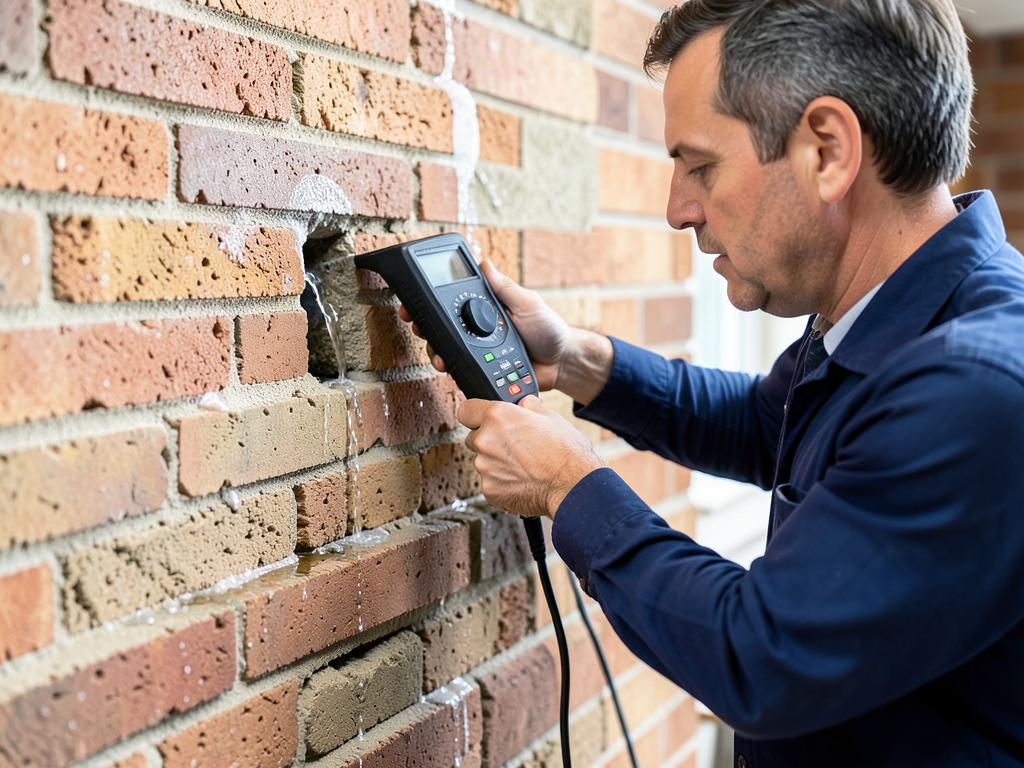
A technician uses a moisture meter to check chimney masonry saturation levels, showing how freeze-thaw cycles cause capillary action to draw water deeper into porous brick.
Pay attention to when the leak appears. Chimney leaks often show up hours or even a day after rain because water travels down through the masonry slowly. If you notice water stains appearing 12-24 hours after a storm, that’s a strong indicator of chimney-related water intrusion rather than a direct roof leak.
Identifying a Standard Roof Leak: Shingles, Valleys, and Gutters
Roof leaks typically follow different patterns than chimney leaks. Water from a failing roof usually appears as a larger, more diffuse stain on your ceiling. The stain often has irregular edges and may grow larger during heavy rain. Unlike chimney leaks, roof leaks usually correlate directly with rainfall intensity.
Check your attic during daylight hours. Roof leaks often show up as daylight visible through gaps in the roof deck or as water trails on rafters. You might see dark stains on wood where water has been seeping for months or years. The sound of dripping water during rain is another clear indicator.
Gutter problems can also mimic roof leaks. When gutters overflow or direct water toward the house instead of away from it, water can back up under shingles or seep through soffits. Carondelet’s older homes often have original gutter systems that no longer handle today’s heavier rainfall patterns.
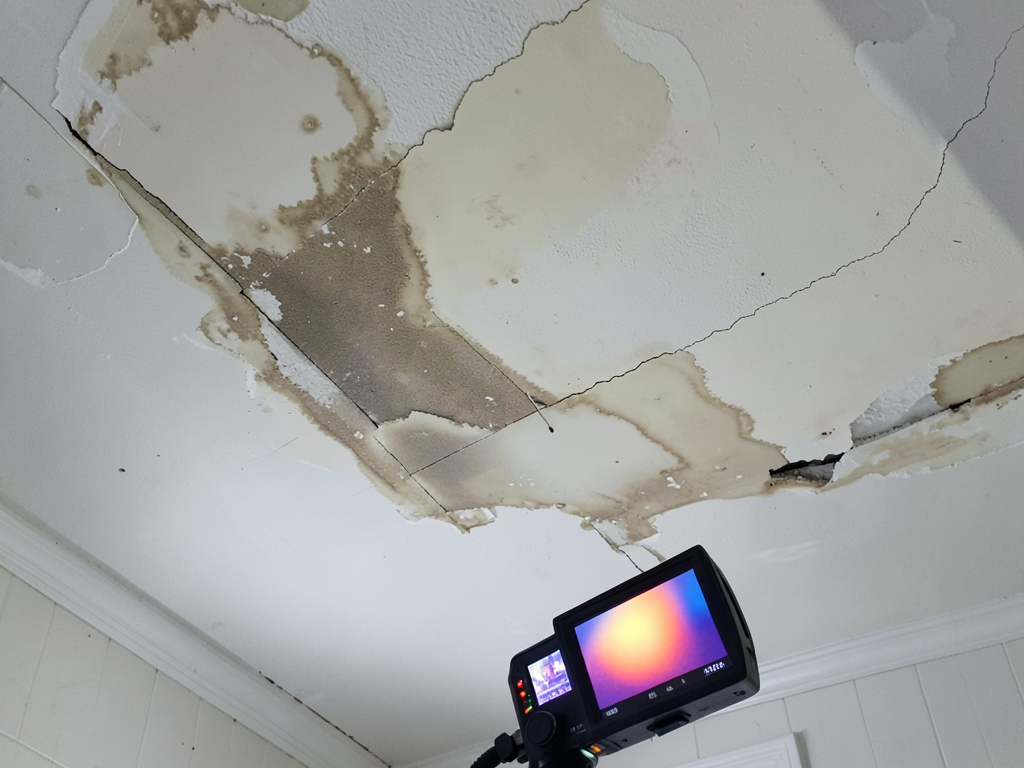
A thermal imaging camera reveals hidden moisture patterns in ceiling drywall, showing how roof leaks create larger affected areas compared to the more localized damage from chimney leaks.
The ‘Attic Test’: A Step-by-Step Diagnostic Guide
Here’s how to determine whether you’re dealing with a chimney leak or a roof leak without climbing on your roof. This attic test takes about 15 minutes and gives you valuable information before calling a professional.
- Safety First
Wear rubber-soled shoes, bring a flashlight, and watch your step on joists. Never walk on insulation directly.
- Locate the Stain
Find where the ceiling stain appears inside your home. Measure the distance from the nearest wall.
- Find the Corresponding Spot
In the attic, measure the same distance from the same wall. This should be near where the water is entering.
- Check for Water Trails
Look for dark streaks, water marks, or damp spots on wood. Roof leaks often leave visible trails along rafters.
- Inspect Near the Chimney
Check the area around your chimney for gaps in flashing, rust spots, or water damage on the chimney itself.
- Feel the Materials
Use your hand to check if wood feels damp or soft. A moisture meter reading above 15% indicates active water intrusion.
If you find water trails leading from the roof downward, you likely have a roof leak. If the area around the chimney shows signs of water damage but no clear trail from above, the chimney flashing or masonry is probably the culprit.
Why St. Louis Weather Makes Chimney Leaks More Common
Carondelet sits in a unique microclimate where the Mississippi River’s proximity creates specific weather patterns that stress older masonry. The freeze-thaw cycles we experience from December through March are particularly damaging to chimney structures. When water gets into tiny cracks in mortar or brick, it expands when frozen, creating larger cracks that admit more water next time.
According to the National Weather Service, St. Louis receives an average of 42 inches of rain annually, with spring thunderstorms delivering much of this in concentrated bursts. These heavy rains test the integrity of aging flashing systems that were designed for less intense precipitation patterns. How to Get Your St. Louis Home Insurance to Actually Pay for Water Damage.
The clay soil common in Carondelet expands when wet and contracts when dry, putting additional stress on chimney foundations. This soil movement can cause chimneys to shift slightly, breaking the seal between flashing and brick. The St. Louis County Soil Survey documents how these expansion-contraction cycles can move foundations up to half an inch annually.
A diagram showing how chimney crickets divert water on steep-pitched roofs, preventing the pooling that leads to flashing failure in older Carondelet homes.
Risks of Delaying Water Damage Restoration
Whether your leak comes from the chimney or roof, the water damage continues long after the rain stops. Wood framing that stays wet for more than 48-72 hours becomes susceptible to rot. The IICRC S500 standard for water damage restoration emphasizes that Category 2 water (which includes rain water) can degrade to Category 3 (contaminated) in as little as 72 hours. IICRC S500 water damage standards.
Mold growth represents another serious risk. St. Louis’s high humidity, averaging 70% in summer months, creates ideal conditions for mold spores to colonize damp materials. Once established, mold can spread through wall cavities via air currents, affecting indoor air quality throughout your home.
Structural damage compounds over time. Wet drywall loses its integrity and may collapse. Electrical systems in affected areas can short circuit, creating fire hazards. The longer water intrusion continues, the more extensive and expensive the repairs become.
Professional Inspection vs. DIY Diagnosis
While the attic test helps you understand the general location of your leak, professional inspection reveals what you can’t see. Water can travel along rafters, pipes, or wiring before dripping onto your ceiling, making the visible stain far from the actual entry point. Who to Call When Your Pipes Burst in Kirkwood This Winter.
Professional water damage restoration technicians use thermal imaging cameras to detect temperature differences that indicate moisture behind walls. They employ moisture meters that measure water content deep within materials, not just surface dampness. These tools can identify hidden damage before it becomes visible and expensive.
The cost difference between catching a problem early versus letting it worsen is substantial. A minor flashing repair might cost $300-500, while replacing rotted rafters, repairing structural damage, and remediating mold can run into thousands of dollars. The EPA estimates that every dollar spent on prevention saves $4-7 in future repairs.
Comparison Table: Chimney Leak vs Roof Leak Symptoms
| Symptom | Chimney Leak | Roof Leak |
|---|---|---|
| Stain Location | Near fireplace or chimney | Random ceiling locations |
| Timing After Rain | Hours to days later | During or immediately after |
| Attic Evidence | Water near chimney base | Water trails on rafters |
| Smell | Musty, earthy | Damp, mildew |
| Worsens When | Freeze-thaw cycles | Heavy wind-driven rain |
| Repair Focus | Flashing, crown, masonry | Shingles, underlayment |
Call (314) 428-9977 today to schedule your inspection. Our technicians arrive within 2 hours for emergency calls in the Carondelet area, equipped with moisture detection equipment and the expertise to identify the true source of your water intrusion. Don’t wait for that small stain to become a major structural problem.
Frequently Asked Questions
How can I tell if my chimney is leaking without going in the attic?
Look for water stains on walls near the chimney, check for white efflorescence on exterior brick, listen for dripping sounds during rain, and notice if the area smells musty after wet weather. These signs often indicate chimney leaks without requiring attic access.
Is a chimney leak covered by homeowners insurance?
Most standard policies cover sudden water damage from a failed chimney flashing or crown, but may exclude damage from long-term neglect or lack of maintenance. Document the damage with photos and contact your insurance company promptly after discovery.
How long can I wait to fix a chimney leak?
Water damage worsens quickly. Mold can begin growing within 24-48 hours, and structural wood rot can start in 3-5 days of continuous moisture exposure. The longer you wait, the more extensive and expensive the repairs become.
Can a roofer fix a chimney leak?
Most roofers can repair chimney flashing, but chimney crown damage or masonry spalling requires a chimney specialist or water damage restoration expert. If water has already entered your home, you need someone who can address both the source and the damage.
What’s the difference between a chimney cricket and regular flashing?
A cricket is a small peaked structure installed behind chimneys on steep roofs to divert water around the chimney. Regular flashing creates a waterproof seal where the chimney meets the roof. Both work together, but crickets are essential on roofs with pitches over 6:12.
Pick up the phone and call (314) 428-9977 before the next storm hits. Our rapid response team serves Carondelet and all of St. Louis, bringing 15 years of local experience to every job. We’ll identify whether your leak is chimney-related or roof-related and provide a clear plan to stop the water and repair the damage. Don’t let uncertainty about your leak source cost you more in the long run.
{
“@context”: “https://schema.org”,
“@type”: “BlogPosting”,
“headline”: “How to Tell if Your Carondelet Home Has a Leaky Chimney or a Roof Problem”,
“description”: “Is that ceiling stain from your chimney or roof? Learn to diagnose chimney vs roof leaks in Carondelet homes with this expert guide from St. Louis water damage pros.”,
“wordCount”: 1749,
“datePublished”: “2026-05-03T10:55:00.000Z”,
“dateModified”: “2026-05-03T10:55:00.000Z”,
“inLanguage”: “en-US”,
“mainEntityOfPage”: {
“@type”: “WebPage”,
“@id”: “https://patriotwaterdamagerestorationstlouis.com”
},
“publisher”: {
“@type”: “LocalBusiness”,
“name”: “Patriot Water Damage Restoration St. Louis”,
“url”: “https://patriotwaterdamagerestorationstlouis.com”
},
“author”: {
“@type”: “Organization”,
“name”: “Patriot Water Damage Restoration St. Louis”,
“url”: “https://patriotwaterdamagerestorationstlouis.com”
},
“image”: {
“@type”: “ImageObject”,
“url”: “https://patriotwaterdamagerestorationstlouis.com/wp-content/uploads/2026/03/how-to-tell-if-your-carondelet-home-has-a-leaky-ch-1.png”
}
}
{
“@context”: “https://schema.org”,
“@type”: “LocalBusiness”,
“name”: “Patriot Water Damage Restoration St. Louis”,
“url”: “https://patriotwaterdamagerestorationstlouis.com”,
“address”: {
“@type”: “PostalAddress”,
“addressLocality”: “St. Louis”
},
“areaServed”: {
“@type”: “City”,
“name”: “St. Louis”
}
}
{
“@context”: “https://schema.org”,
“@type”: “FAQPage”,
“mainEntity”: [
{
“@type”: “Question”,
“name”: “How can I tell if my chimney is leaking without going in the attic?”,
“acceptedAnswer”: {
“@type”: “Answer”,
“text”: “Look for water stains on walls near the chimney, check for white efflorescence on exterior brick, listen for dripping sounds during rain, and notice if the area smells musty after wet weather. These signs often indicate chimney leaks without requiring attic access.”
}
},
{
“@type”: “Question”,
“name”: “Is a chimney leak covered by homeowners insurance?”,
“acceptedAnswer”: {
“@type”: “Answer”,
“text”: “Most standard policies cover sudden water damage from a failed chimney flashing or crown, but may exclude damage from long-term neglect or lack of maintenance. Document the damage with photos and contact your insurance company promptly after discovery.”
}
},
{
“@type”: “Question”,
“name”: “How long can I wait to fix a chimney leak?”,
“acceptedAnswer”: {
“@type”: “Answer”,
“text”: “Water damage worsens quickly. Mold can begin growing within 24-48 hours, and structural wood rot can start in 3-5 days of continuous moisture exposure. The longer you wait, the more extensive and expensive the repairs become.”
}
},
{
“@type”: “Question”,
“name”: “Can a roofer fix a chimney leak?”,
“acceptedAnswer”: {
“@type”: “Answer”,
“text”: “Most roofers can repair chimney flashing, but chimney crown damage or masonry spalling requires a chimney specialist or water damage restoration expert. If water has already entered your home, you need someone who can address both the source and the damage.”
}
},
{
“@type”: “Question”,
“name”: “What’s the difference between a chimney cricket and regular flashing?”,
“acceptedAnswer”: {
“@type”: “Answer”,
“text”: “A cricket is a small peaked structure installed behind chimneys on steep roofs to divert water around the chimney. Regular flashing creates a waterproof seal where the chimney meets the roof. Both work together, but crickets are essential on roofs with pitches over 6:12.”
}
}
]
}
{
“@context”: “https://schema.org”,
“@type”: “HowTo”,
“name”: “How to Diagnose Chimney vs Roof Leak”,
“step”: [
{
“@type”: “HowToStep”,
“position”: 1,
“name”: “Safety First”,
“text”: “Wear rubber-soled shoes, bring a flashlight, and watch your step on joists. Never walk on insulation directly.”
},
{
“@type”: “HowToStep”,
“position”: 2,
“name”: “Locate the Stain”,
“text”: “Find where the ceiling stain appears inside your home. Measure the distance from the nearest wall.”
},
{
“@type”: “HowToStep”,
“position”: 3,
“name”: “Find the Corresponding Spot”,
“text”: “In the attic, measure the same distance from the same wall. This should be near where the water is entering.”
},
{
“@type”: “HowToStep”,
“position”: 4,
“name”: “Check for Water Trails”,
“text”: “Look for dark streaks, water marks, or damp spots on wood. Roof leaks often leave visible trails along rafters.”
},
{
“@type”: “HowToStep”,
“position”: 5,
“name”: “Inspect Near the Chimney”,
“text”: “Check the area around your chimney for gaps in flashing, rust spots, or water damage on the chimney itself.”
},
{
“@type”: “HowToStep”,
“position”: 6,
“name”: “Feel the Materials”,
“text”: “Use your hand to check if wood feels damp or soft. A moisture meter reading above 15% indicates active water intrusion.”
}
],
“image”: “https://patriotwaterdamagerestorationstlouis.com/wp-content/uploads/2026/03/how-to-tell-if-your-carondelet-home-has-a-leaky-ch-1.png”
}
{
“@context”: “https://schema.org”,
“@type”: “BreadcrumbList”,
“itemListElement”: [
{
“@type”: “ListItem”,
“position”: 1,
“name”: “Home”,
“item”: “https://patriotwaterdamagerestorationstlouis.com”
},
{
“@type”: “ListItem”,
“position”: 2,
“name”: “Blog”,
“item”: “https://patriotwaterdamagerestorationstlouis.com/blog”
},
{
“@type”: “ListItem”,
“position”: 3,
“name”: “How to Tell if Your Carondelet Home Has a Leaky Chimney or a Roof Problem”
}
]
}
{
“@context”: “https://schema.org”,
“@type”: “Service”,
“serviceType”: “Water Damage Restoration”,
“provider”: {
“@type”: “LocalBusiness”,
“name”: “Patriot Water Damage Restoration St. Louis”,
“url”: “https://patriotwaterdamagerestorationstlouis.com”
},
“areaServed”: {
“@type”: “City”,
“name”: “St. Louis”
},
“description”: “Is that ceiling stain from your chimney or roof? Learn to diagnose chimney vs roof leaks in Carondelet homes with this expert guide from St. Louis water damage pros.”
}