
The Real Cost of Ignoring a Small Ceiling Stain in Your Overland Ranch Home
A small brown spot on your ceiling might look harmless but it’s actually a warning sign. In Overland Ranch homes built in the 1960s and 1970s the ceiling stain often means water is already trapped inside your ceiling cavity. That trapped moisture can cause mold growth within 24 to 48 hours and weaken the drywall structure. The longer you wait the more expensive the repair becomes. EPA mold guidelines.
Overland Ranch homes have a specific vulnerability. Their low-pitched roofs and original single-layer shingles often fail after decades of Missouri weather. When the underlayment degrades even a small gap lets water seep in. That water travels along rafters and insulation before finally showing up as a stain. By the time you see it the damage is already spreading. Professional Water Extraction and Drying for St. Charles Residents.
The first step is to check if the stain is active. Touch the spot with a dry finger. If it feels damp or soft the leak is still happening. If the drywall feels spongy it’s already losing structural integrity. These are signs you need professional moisture mapping before the ceiling collapses.. Read more about Deciding Between a Professional Restoration Company and a General Contractor for St. Louis Home Repairs.
Common Sources of Ceiling Stains in Overland Homes
Overland’s mix of ranch-style homes and occasional split-levels creates different leak patterns. Here are the most common sources we see during inspections.
- Roof Age and Material Failure
Most Overland homes have original 20-to-30-year shingles that are now 40 to 50 years old. The asphalt dries out creating cracks that let water in during heavy rain. Water Damage Restoration Manchester.
- Flashing Deterioration
Roof penetrations around chimneys skylights and vent pipes use metal flashing that corrodes over time. Once the seal fails water tracks under shingles. Who to Call When Your Pipes Burst in Kirkwood This Winter.
- Ice Dam Formation
Missouri’s freeze-thaw cycles cause ice dams along roof edges. Melting snow backs up under shingles and drips into the attic space.
- Plumbing Leaks
Galvanized pipes in homes built before 1970 corrode from the inside. A small pinhole leak in an upstairs bathroom can soak ceiling joists for months before a stain appears.
- HVAC Condensation
Air handlers in attics produce condensation. If the drain line clogs or the pan cracks water collects on ceiling drywall. Water Damage Restoration Florissant.
The Hidden Dangers Behind That Stain
Most homeowners think a stain is just a cosmetic issue. The real danger is what you can’t see. Water trapped in ceiling cavities creates the perfect environment for black mold Stachybotrys which produces mycotoxins that can cause respiratory problems.. Read more about Choosing the Best Smart Water Leak Detectors for Your Compton Heights Historic Home.
Beyond health risks there’s structural damage. Water-soaked drywall loses 50 percent of its strength. Wet insulation clumps and loses R-value. Wooden rafters can develop wood rot if moisture stays above 20 percent for more than a few weeks.
In Overland’s clay soil homes also experience foundation movement. This shifts roof framing over time creating new gaps at the ridge line. Those gaps often go unnoticed until a stain appears months later.
Diagnostic Steps You Can Take Right Now
Before calling a professional you can perform these quick checks to understand the severity.
- Touch Test
Press the stained area with a dry tissue. If it comes away damp the leak is active. If the drywall feels soft it’s already failing.
- Visual Inspection Above
If you have attic access look for daylight through roof boards. Also check for wet insulation or dark wood stains on rafters.
- Check Surrounding Areas
Look at walls near the stain for bubbling paint or soft drywall. Water often travels sideways before dropping down.
- Monitor Over 24 Hours
Place a dry paper towel on the stain. If it shows moisture after a day the leak is ongoing.
These steps help you decide if you need emergency service or if it’s safe to wait for a scheduled inspection.
Why Overland Ranch Homes Are Especially Vulnerable
Overland’s housing stock tells a specific story. Most homes were built between 1955 and 1975 using lumber from old-growth forests. That wood was dense and rot-resistant but it also had tight growth rings that trap moisture.. Read more about Why Your HVAC Condensate Pan is Overflowing in Your Forest Park Southeast Apartment.
The original roofers used organic felt underlayment which breaks down faster than modern synthetic materials. Combine that with Overland’s average annual rainfall of 38 inches and you get a perfect storm for slow leaks.
Another factor is the city’s combined sewer system. During heavy storms the system backs up causing water to seek the path of least resistance. In some older Overland homes this means water can back up through foundation cracks and travel up wall cavities to the ceiling.
Professional Moisture Detection and Mapping
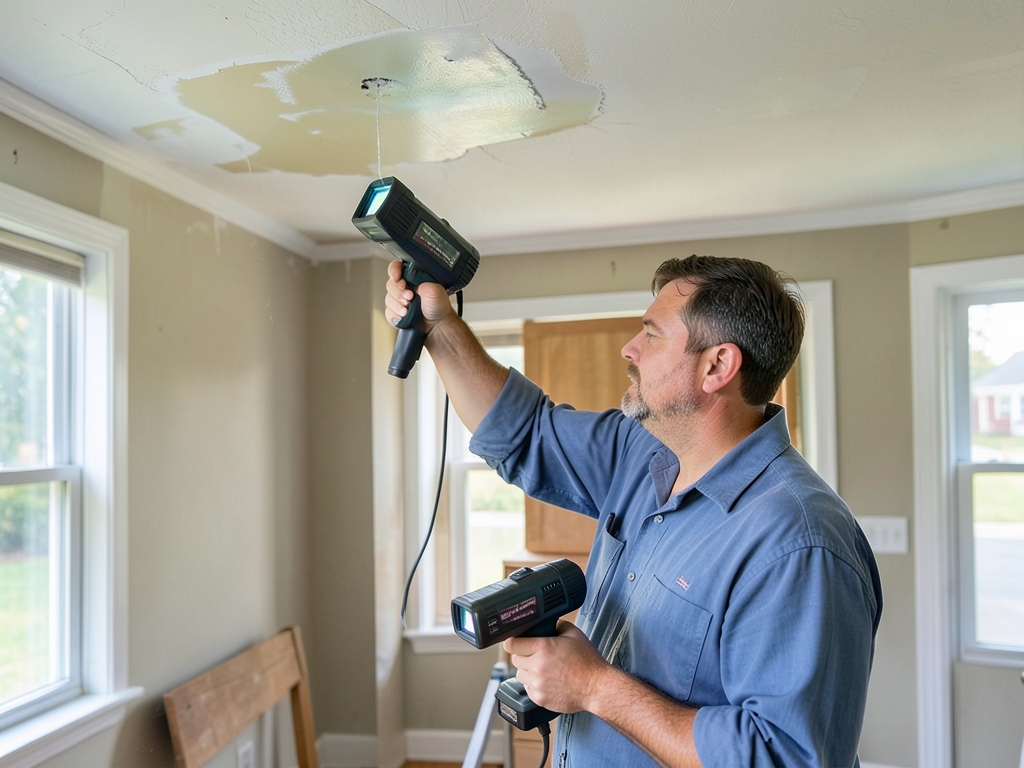
When we arrive on site we don’t guess. We use moisture meters calibrated for drywall and wood. We also use thermal imaging cameras that detect temperature differences caused by trapped moisture.
The process starts with establishing a dry standard using an unaffected area of your home. Then we scan the stained area and surrounding ceiling. If the meter reads above 16 percent moisture content in drywall we know there’s active water intrusion.
Thermal imaging reveals the full extent of the moisture plume. What looks like a small stain might actually be a two-foot diameter wet zone hidden behind paint. This mapping guides our drying strategy and helps prevent unnecessary demolition.
The Restoration Process for Ceiling Water Damage
Unlike simple drywall patching restoration addresses the cause and prevents recurrence. Here’s our proven process.
- Emergency Containment
We place containment barriers to prevent mold spores from spreading through your home’s HVAC system.
- Water Source Elimination
We coordinate with roofers or plumbers to stop the active leak before any repair work begins.
- Moisture Extraction
Using industrial dehumidifiers and air movers we remove trapped moisture from ceiling cavities and insulation.
- Antimicrobial Treatment
We apply EPA-registered antimicrobials to prevent mold growth in affected areas.
- Structural Drying Verification
We use moisture meters to confirm the area is dry to industry standards before reconstruction.
- Reconstruction
We replace damaged drywall insulation and paint to match existing finishes.
This systematic approach follows IICRC S500 standards for water damage restoration. It ensures your ceiling is not just patched but fully restored to pre-loss condition. IICRC S500 standards.
Cost Factors for Ceiling Restoration in Overland
Several variables affect the final cost of ceiling restoration. Understanding these helps you plan and avoid surprises.
| Factor | Impact on Cost | Typical Range |
|---|---|---|
| Size of Affected Area | Larger areas need more drying equipment and materials | $500 – $3,000 |
| Material Type | Plaster repairs cost more than drywall | $800 – $4,000 |
| Insulation Condition | Wet insulation must be replaced to prevent mold | $300 – $1,500 |
| Mold Presence | Professional remediation adds labor and equipment | $1,500 – $6,000 |
| Accessibility | High ceilings or finished attics increase labor | $200 – $1,000 |
Insurance coverage varies. Most policies cover sudden accidental damage but not long-term neglect. We work directly with your insurance adjuster to document damage and streamline claims. How to Get Your St. Louis Home Insurance to Actually Pay for Water Damage.
Preventing Future Ceiling Stains
Once your ceiling is restored you want to prevent recurrence. Here are proven prevention strategies for Overland homes.
- Schedule annual roof inspections to catch flashing and shingle issues early
- Clean gutters twice yearly to prevent ice dam formation
- Check attic ventilation to ensure proper airflow and moisture control
- Inspect plumbing lines in older homes for corrosion signs
- Install water leak detectors near water heaters and in attics
These simple steps can extend your roof life by five to ten years and prevent costly interior damage.
Emergency Response: What to Do When You Spot a Stain
Time matters when you discover a ceiling stain. Follow these steps immediately.
- Contain the Area
Place buckets under the stain to catch dripping water. Move furniture away from the affected zone.
- Stop the Water Source
If you can identify the source (like a leaking pipe) shut off the water supply.
- Document the Damage
Take photos of the stain and any visible water sources. This helps with insurance claims.
- Call for Professional Assessment
Don’t wait for the stain to grow. Early intervention prevents structural damage.
Call (314) 428-9977 now for 24/7 emergency response. We’ll arrive within two hours to assess and contain the damage.
Why Professional Restoration Beats DIY Patching
Many homeowners try to simply paint over a water stain. This approach fails because it doesn’t address the underlying moisture. Paint over a damp surface traps water, accelerating mold growth and material decay.
Professional restoration follows a systematic process. We verify the leak is stopped, remove all moisture, treat for mold prevention, and then repair. This ensures the problem won’t return in three months.
We also provide documentation for insurance purposes. Our reports include moisture readings, photos, and a detailed scope of work that insurance adjusters recognize.
Frequently Asked Questions
How long does ceiling restoration take?
Most residential ceiling restorations take three to five days from initial assessment to final paint. Drying time accounts for the majority of this period.
Will my insurance cover ceiling water damage?
Coverage depends on the cause. Sudden accidental damage from storms or burst pipes is typically covered. Long-term neglect or maintenance issues are usually excluded.
Can I stay in my home during restoration?
Yes in most cases. We contain the work area with plastic barriers and use HEPA air filtration to maintain indoor air quality.
How do I know if mold is growing behind my ceiling?
Musty odors visible mold growth or persistent allergy symptoms can indicate hidden mold. Professional testing can confirm its presence and extent.
What’s the difference between Category 1 and Category 3 water damage?
Category 1 is clean water from a broken supply line. Category 3 is contaminated water from sewage or flooding. Category 3 requires more extensive safety protocols and disposal procedures.
Call for Your Free Inspection Today
Don’t let a small ceiling stain become a major repair. Our certified technicians serve Overland and surrounding St. Louis communities with rapid response and proven restoration methods.
Call (314) 428-9977 now for a free inspection. We’ll identify the source provide a clear scope of work and begin restoration immediately if needed. Our team is available 24/7 because water damage doesn’t wait for business hours.
Pick up the phone and call (314) 428-9977 before the next storm hits. Your home deserves professional care from technicians who understand Overland’s unique housing stock and weather patterns.
{
“@context”: “https://schema.org”,
“@type”: “BlogPosting”,
“headline”: “The Real Cost of Ignoring a Small Ceiling Stain in Your Overland Ranch Home”,
“description”: “Discover the hidden dangers of ceiling stains in Overland homes. Learn what that small spot really means, the risks of ignoring it, and how fast professional restoration prevents major damage.”,
“wordCount”: 1721,
“datePublished”: “2026-04-03T07:42:00.000Z”,
“dateModified”: “2026-04-03T07:42:00.000Z”,
“inLanguage”: “en-US”,
“mainEntityOfPage”: {
“@type”: “WebPage”,
“@id”: “https://patriotwaterdamagerestorationstlouis.com”
},
“publisher”: {
“@type”: “LocalBusiness”,
“name”: “Patriot Water Damage Restoration St. Louis”,
“url”: “https://patriotwaterdamagerestorationstlouis.com”
},
“author”: {
“@type”: “Organization”,
“name”: “Patriot Water Damage Restoration St. Louis”,
“url”: “https://patriotwaterdamagerestorationstlouis.com”
},
“image”: {
“@type”: “ImageObject”,
“url”: “https://patriotwaterdamagerestorationstlouis.com/wp-content/uploads/2026/03/the-real-cost-of-ignoring-a-small-ceiling-stain-in-1.png”
}
}
{
“@context”: “https://schema.org”,
“@type”: “LocalBusiness”,
“name”: “Patriot Water Damage Restoration St. Louis”,
“url”: “https://patriotwaterdamagerestorationstlouis.com”,
“address”: {
“@type”: “PostalAddress”,
“addressLocality”: “St. Louis”
},
“areaServed”: {
“@type”: “City”,
“name”: “St. Louis”
}
}
{
“@context”: “https://schema.org”,
“@type”: “FAQPage”,
“mainEntity”: [
{
“@type”: “Question”,
“name”: “How long does ceiling restoration take?”,
“acceptedAnswer”: {
“@type”: “Answer”,
“text”: “Most residential ceiling restorations take three to five days from initial assessment to final paint. Drying time accounts for the majority of this period.”
}
},
{
“@type”: “Question”,
“name”: “Will my insurance cover ceiling water damage?”,
“acceptedAnswer”: {
“@type”: “Answer”,
“text”: “Coverage depends on the cause. Sudden accidental damage from storms or burst pipes is typically covered. Long-term neglect or maintenance issues are usually excluded.”
}
},
{
“@type”: “Question”,
“name”: “Can I stay in my home during restoration?”,
“acceptedAnswer”: {
“@type”: “Answer”,
“text”: “Yes in most cases. We contain the work area with plastic barriers and use HEPA air filtration to maintain indoor air quality.”
}
},
{
“@type”: “Question”,
“name”: “What’s the difference between Category 1 and Category 3 water damage?”,
“acceptedAnswer”: {
“@type”: “Answer”,
“text”: “Category 1 is clean water from a broken supply line. Category 3 is contaminated water from sewage or flooding. Category 3 requires more extensive safety protocols and disposal procedures.”
}
}
]
}
{
“@context”: “https://schema.org”,
“@type”: “HowTo”,
“name”: “Common Ceiling Stain Sources”,
“step”: [
{
“@type”: “HowToStep”,
“position”: 1,
“name”: “Roof Age and Material Failure”,
“text”: “Most Overland homes have original 20-to-30-year shingles that are now 40 to 50 years old. The asphalt dries out creating cracks that let water in during heavy rain. Water Damage Restoration Manchester.”
},
{
“@type”: “HowToStep”,
“position”: 2,
“name”: “Flashing Deterioration”,
“text”: “Roof penetrations around chimneys skylights and vent pipes use metal flashing that corrodes over time. Once the seal fails water tracks under shingles. Who to Call When Your Pipes Burst in Kirkwood This Winter.”
},
{
“@type”: “HowToStep”,
“position”: 3,
“name”: “Ice Dam Formation”,
“text”: “Missouri’s freeze-thaw cycles cause ice dams along roof edges. Melting snow backs up under shingles and drips into the attic space.”
},
{
“@type”: “HowToStep”,
“position”: 4,
“name”: “Plumbing Leaks”,
“text”: “Galvanized pipes in homes built before 1970 corrode from the inside. A small pinhole leak in an upstairs bathroom can soak ceiling joists for months before a stain appears.”
},
{
“@type”: “HowToStep”,
“position”: 5,
“name”: “HVAC Condensation”,
“text”: “Air handlers in attics produce condensation. If the drain line clogs or the pan cracks water collects on ceiling drywall. Water Damage Restoration Florissant.”
}
],
“image”: “https://patriotwaterdamagerestorationstlouis.com/wp-content/uploads/2026/03/the-real-cost-of-ignoring-a-small-ceiling-stain-in-1.png”
}
{
“@context”: “https://schema.org”,
“@type”: “BreadcrumbList”,
“itemListElement”: [
{
“@type”: “ListItem”,
“position”: 1,
“name”: “Home”,
“item”: “https://patriotwaterdamagerestorationstlouis.com”
},
{
“@type”: “ListItem”,
“position”: 2,
“name”: “Blog”,
“item”: “https://patriotwaterdamagerestorationstlouis.com/blog”
},
{
“@type”: “ListItem”,
“position”: 3,
“name”: “The Real Cost of Ignoring a Small Ceiling Stain in Your Overland Ranch Home”
}
]
}
{
“@context”: “https://schema.org”,
“@type”: “Service”,
“serviceType”: “Water Damage Restoration”,
“provider”: {
“@type”: “LocalBusiness”,
“name”: “Patriot Water Damage Restoration St. Louis”,
“url”: “https://patriotwaterdamagerestorationstlouis.com”
},
“areaServed”: {
“@type”: “City”,
“name”: “St. Louis”
},
“description”: “Discover the hidden dangers of ceiling stains in Overland homes. Learn what that small spot really means, the risks of ignoring it, and how fast professional restoration prevents major damage.”
}