
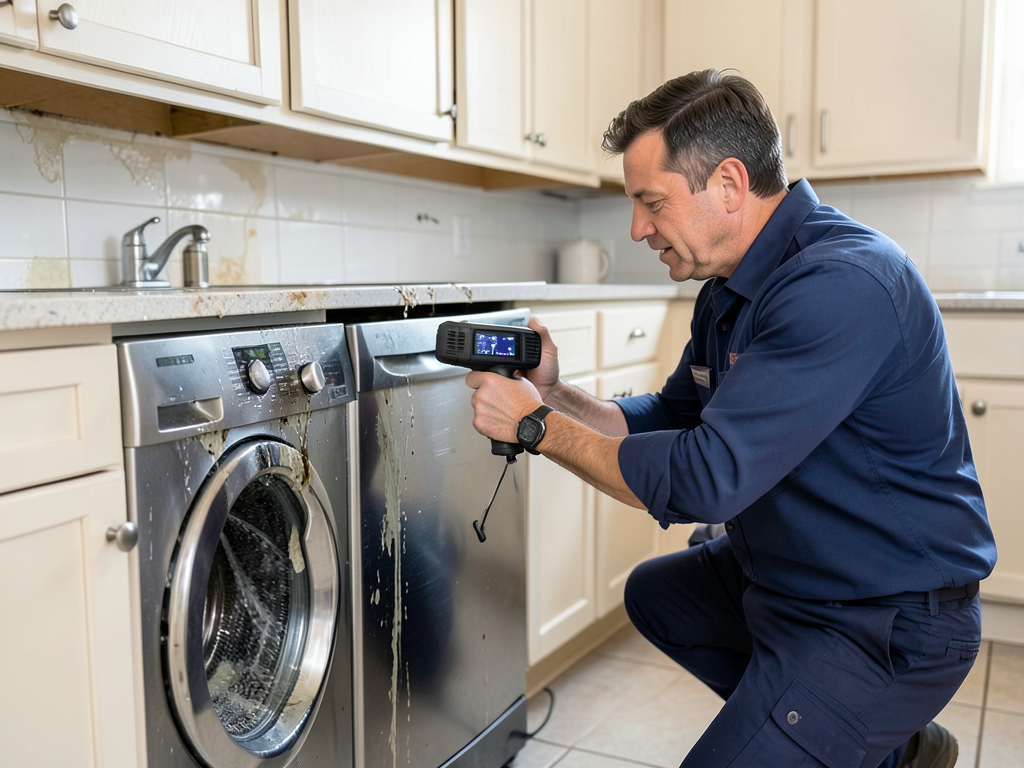
What to Do When Your Dishwasher Overflows and Ruins the Flooring in Your Bridgeton Home
A dishwasher leak in your Bridgeton home can turn a quiet evening into a water damage emergency within minutes. The first 24 hours after a dishwasher overflow are critical for saving your flooring and preventing mold growth. This guide walks you through the immediate steps to take, the hidden dangers lurking beneath your kitchen floor, and how to navigate the restoration process in St. Louis. How to Get Your St. Louis Home Insurance to Actually Pay for Water Damage.
Immediate Steps: What to Do in the First 24 Hours
Time is your enemy when clean water from a dishwasher supply line hits your kitchen floor. The longer moisture sits against wood or laminate, the more it spreads and the deeper it penetrates. Here is your emergency action plan: Professional Water Extraction and Drying for St. Charles Residents.
- Shut Off the Water Supply
Locate the shut-off valve under the kitchen sink or at your main water line. Turn it clockwise until it stops. This prevents the leak from continuing while you assess the damage. Water Damage Restoration Manchester.
- Disconnect Power
If water has spread near electrical outlets or appliances, turn off the kitchen circuit at your breaker panel. Water conducts electricity and poses a serious shock hazard.
- Remove Standing Water
Use towels, mops, or a wet vacuum to extract visible water. Focus on areas around the dishwasher and along baseboards where water tends to pool.
- Document the Damage
Take photos and videos of all affected areas before moving anything. This documentation is essential for insurance claims and helps restoration professionals assess the scope of work.
Do not attempt to dry the floor with fans alone. Kitchen water damage often involves moisture trapped under cabinets and in subfloors where air cannot reach. Professional drying equipment is necessary to prevent structural damage and mold growth.
Assessing Damage by Flooring Type
The type of flooring in your Bridgeton kitchen determines how quickly water causes permanent damage and what restoration options exist. Here is what to expect from common kitchen flooring materials:
| Flooring Type | Water Damage Timeline | Restoration Potential |
|---|---|---|
| Engineered Hardwood | 24-48 hours for visible warping | Possible with rapid drying if caught early |
| Natural Hardwood | 12-24 hours for cupping | Often requires sanding and refinishing |
| Laminate Flooring | 2-4 hours for swelling | Generally not restorable; replacement needed |
| Tile (Ceramic/ Porcelain) | 48+ hours for subfloor damage | Tile may survive; subfloor often needs repair |
| Vinyl Plank (LVP) | 24-36 hours for delamination | May be salvageable if seams remain intact |
Hardwood floors show the first signs of water damage through cupping, where the edges of boards rise higher than the center. This occurs because the bottom of the board absorbs moisture and expands while the top remains dry. Laminate flooring reacts differently, with water causing the fiberboard core to swell and the surface to bubble or peel away.
Tile floors can be deceptive. While the tile surface may appear unaffected, water can seep through grout lines and saturate the subfloor beneath. This creates a perfect environment for mold growth in the dark, warm space under your cabinets.
Hidden Dangers: The Subfloor and Mold Growth
The real damage from a dishwasher overflow often occurs where you cannot see it. Water flows to the lowest point, which in most Bridgeton kitchens means under the dishwasher, behind cabinets, and into the subfloor. Here is what happens in those hidden spaces:
Subfloor plywood absorbs water like a sponge. Within 24-48 hours, the wood can lose structural integrity, leading to soft spots that feel spongy when walked on. The moisture also creates ideal conditions for mold spores to germinate and spread. According to the IICRC S500 Standard for Professional Water Damage Restoration, Category 1 water (clean water from supply lines) can degrade to Category 2 or 3 within 48-72 hours if not properly dried. IICRC Standards.
Mold growth behind kitchen cabinets poses unique health risks. The warm, dark environment with constant food residue creates a perfect breeding ground for mold colonies. These colonies can release spores into your breathing air even if you cannot see visible mold on surfaces.
Professional moisture mapping using infrared cameras and moisture meters is essential to identify all affected areas. Surface dryness does not guarantee that hidden spaces are dry. A moisture meter reading above 16% in wood subfloors indicates conditions favorable for mold growth.
The Restoration Process: Our 5-Step St. Louis Protocol
Professional water damage restoration follows a systematic approach to ensure complete drying and prevent secondary damage. Here is what to expect when you call Patriot Water Damage Restoration:
- Inspection and Assessment
Our certified technicians use moisture meters, thermal imaging cameras, and hygrometers to map the extent of water migration. We check under cabinets, behind toe-kicks, and in wall cavities adjacent to the kitchen.
- Water Removal
We extract standing water using truck-mounted extraction units capable of removing hundreds of gallons per hour. This step prevents further absorption into flooring and walls. Removing Mold from Historic Central West End Homes Without Damaging the Architecture.
- Drying and Dehumidification
Industrial air movers create airflow across wet surfaces while low-grain refrigerant (LGR) dehumidifiers remove moisture from the air. This combination can dry hardwood floors in 3-5 days versus weeks with consumer equipment.
- Cleaning and Sanitizing
We apply antimicrobial treatments to prevent mold growth and remove any contaminants from the water. This step is crucial for dishwasher leaks, which involve Category 1 water that can degrade if left untreated.
- Final Restoration
Once drying is complete and verified with moisture readings, we coordinate repairs. This may include reinstalling flooring, repairing subfloors, or replacing damaged cabinetry. EPA Mold Information.
The entire process typically takes 3-7 days depending on the extent of damage and the materials involved. Our team works directly with your insurance company to streamline the claims process.
Navigating Insurance Claims in Missouri
Most standard homeowners insurance policies in St. Louis cover sudden and accidental water damage from appliance failures, including dishwasher overflows. However, coverage details matter. Here is what you need to know:
Document everything from the moment you discover the leak. Photos, videos, and a detailed inventory of damaged items strengthen your claim. Keep all receipts for emergency services like water extraction and temporary lodging if the damage forces you to leave your home.
Insurance adjusters look for signs of long-term neglect versus sudden damage. A dishwasher that has been slowly leaking for months may not be covered, while a supply line that bursts during a wash cycle typically is covered. Our team provides detailed damage assessments and can communicate directly with insurance companies to support your claim. Who to Call When Your Pipes Burst in Kirkwood This Winter.
Common insurance providers in the St. Louis area include State Farm, American Family, and Liberty Mutual. Each has different claim procedures, but all require prompt reporting of water damage to prevent further loss.
Preventing Future Dishwasher Leaks
While you cannot prevent every appliance failure, several maintenance steps can reduce your risk of future dishwasher overflows:
- Inspect supply lines annually for cracks, bulges, or corrosion
- Replace standard rubber hoses with steel-braided supply lines
- Clean the dishwasher filter monthly to prevent clogs
- Level your dishwasher to ensure proper drainage
- Consider a water leak detector with automatic shut-off valve
Most dishwasher failures occur in units over 8-10 years old. If your dishwasher is approaching this age, consider replacement before a catastrophic failure occurs.
Why Choose Patriot Water Damage Restoration
Patriot Water Damage Restoration has served the St. Louis metro area for over 15 years, with specific experience handling kitchen water damage in Bridgeton and surrounding communities. Our team holds IICRC certifications in water damage restoration and applied structural drying.
We understand the unique challenges of St. Louis homes, from the clay soil that affects foundation drainage to the humid summers that slow natural drying. Our rapid response team is available 24/7 and can typically arrive at your Bridgeton home within 60 minutes of your call.
We use commercial-grade equipment including thermal imaging cameras, moisture meters, and industrial dehumidifiers to ensure complete drying. Our process follows IICRC S500 standards, which means we document every step and verify results with scientific measurements rather than visual inspection alone.
Don’t Wait Until It’s Too Late
Water damage from a dishwasher overflow does not improve with time. Every hour that passes allows moisture to spread deeper into your flooring, walls, and cabinets. The cost of restoration increases exponentially the longer you wait.
If you are dealing with a dishwasher leak right now, call (314) 428-9977 for immediate assistance. Our team is standing by to help Bridgeton residents recover from water damage quickly and completely.
For non-emergency situations, schedule a free inspection to assess any existing water damage you may not have noticed. Early detection can save thousands in restoration costs.
Pick up the phone and call (314) 428-9977 before the next storm hits. Water damage does not wait for convenient timing, and neither should your response.
Frequently Asked Questions
How long does it take to dry a kitchen floor after a dishwasher leak?
Professional drying typically takes 3-5 days for hardwood floors and 2-3 days for tile or vinyl. The exact time depends on the extent of saturation, the type of flooring, and the drying equipment used.
Will my insurance cover dishwasher water damage?
Most standard homeowners insurance policies cover sudden and accidental water damage from appliance failures. However, damage from neglected maintenance or gradual leaks may not be covered. Check your specific policy details.
Can I save my hardwood floors if they are already cupping?
Cupping indicates significant moisture absorption, but professional drying may still save the floors if caught early enough. The success rate depends on how long the moisture has been present and the extent of the damage.
What is the difference between Category 1 and Category 2 water damage?
Category 1 water comes from clean sources like supply lines and is initially safe. However, it can degrade to Category 2 (gray water) within 48-72 hours if not properly dried, as it can support microbial growth.
How much does professional water damage restoration cost?
Costs vary based on the extent of damage, but most kitchen water damage restoration projects range from $1,500 to $5,000. Insurance often covers a significant portion of these costs for sudden leaks.
{
“@context”: “https://schema.org”,
“@type”: “BlogPosting”,
“headline”: “What to Do When Your Dishwasher Overflows and Ruins the Flooring in Your Bridgeton Home”,
“description”: “A dishwasher leak in Bridgeton can destroy flooring in hours. Learn immediate steps, hidden dangers, and how Patriot Water Damage Restoration provides 24/7 emergency response.”,
“wordCount”: 1719,
“datePublished”: “2026-03-15T09:47:00.000Z”,
“dateModified”: “2026-03-15T09:47:00.000Z”,
“inLanguage”: “en-US”,
“mainEntityOfPage”: {
“@type”: “WebPage”,
“@id”: “https://patriotwaterdamagerestorationstlouis.com”
},
“publisher”: {
“@type”: “LocalBusiness”,
“name”: “Patriot Water Damage Restoration St. Louis”,
“url”: “https://patriotwaterdamagerestorationstlouis.com”
},
“author”: {
“@type”: “Organization”,
“name”: “Patriot Water Damage Restoration St. Louis”,
“url”: “https://patriotwaterdamagerestorationstlouis.com”
},
“image”: {
“@type”: “ImageObject”,
“url”: “https://patriotwaterdamagerestorationstlouis.com/wp-content/uploads/2026/03/what-to-do-when-your-dishwasher-overflows-and-ruin-1.png”
}
}
{
“@context”: “https://schema.org”,
“@type”: “LocalBusiness”,
“name”: “Patriot Water Damage Restoration St. Louis”,
“url”: “https://patriotwaterdamagerestorationstlouis.com”,
“address”: {
“@type”: “PostalAddress”,
“addressLocality”: “St. Louis”
},
“areaServed”: {
“@type”: “City”,
“name”: “St. Louis”
}
}
{
“@context”: “https://schema.org”,
“@type”: “FAQPage”,
“mainEntity”: [
{
“@type”: “Question”,
“name”: “How long does it take to dry a kitchen floor after a dishwasher leak?”,
“acceptedAnswer”: {
“@type”: “Answer”,
“text”: “Professional drying typically takes 3-5 days for hardwood floors and 2-3 days for tile or vinyl. The exact time depends on the extent of saturation, the type of flooring, and the drying equipment used.”
}
},
{
“@type”: “Question”,
“name”: “Will my insurance cover dishwasher water damage?”,
“acceptedAnswer”: {
“@type”: “Answer”,
“text”: “Most standard homeowners insurance policies cover sudden and accidental water damage from appliance failures. However, damage from neglected maintenance or gradual leaks may not be covered. Check your specific policy details.”
}
},
{
“@type”: “Question”,
“name”: “Can I save my hardwood floors if they are already cupping?”,
“acceptedAnswer”: {
“@type”: “Answer”,
“text”: “Cupping indicates significant moisture absorption, but professional drying may still save the floors if caught early enough. The success rate depends on how long the moisture has been present and the extent of the damage.”
}
},
{
“@type”: “Question”,
“name”: “What is the difference between Category 1 and Category 2 water damage?”,
“acceptedAnswer”: {
“@type”: “Answer”,
“text”: “Category 1 water comes from clean sources like supply lines and is initially safe. However, it can degrade to Category 2 (gray water) within 48-72 hours if not properly dried, as it can support microbial growth.”
}
},
{
“@type”: “Question”,
“name”: “How much does professional water damage restoration cost?”,
“acceptedAnswer”: {
“@type”: “Answer”,
“text”: “Costs vary based on the extent of damage, but most kitchen water damage restoration projects range from $1,500 to $5,000. Insurance often covers a significant portion of these costs for sudden leaks.”
}
}
]
}
{
“@context”: “https://schema.org”,
“@type”: “HowTo”,
“name”: “Emergency Dishwasher Overflow Response”,
“step”: [
{
“@type”: “HowToStep”,
“position”: 1,
“name”: “Shut Off the Water Supply”,
“text”: “Locate the shut-off valve under the kitchen sink or at your main water line. Turn it clockwise until it stops. This prevents the leak from continuing while you assess the damage. Water Damage Restoration Manchester.”
},
{
“@type”: “HowToStep”,
“position”: 2,
“name”: “Disconnect Power”,
“text”: “If water has spread near electrical outlets or appliances, turn off the kitchen circuit at your breaker panel. Water conducts electricity and poses a serious shock hazard.”
},
{
“@type”: “HowToStep”,
“position”: 3,
“name”: “Remove Standing Water”,
“text”: “Use towels, mops, or a wet vacuum to extract visible water. Focus on areas around the dishwasher and along baseboards where water tends to pool.”
},
{
“@type”: “HowToStep”,
“position”: 4,
“name”: “Document the Damage”,
“text”: “Take photos and videos of all affected areas before moving anything. This documentation is essential for insurance claims and helps restoration professionals assess the scope of work.”
}
],
“image”: “https://patriotwaterdamagerestorationstlouis.com/wp-content/uploads/2026/03/what-to-do-when-your-dishwasher-overflows-and-ruin-1.png”
}
{
“@context”: “https://schema.org”,
“@type”: “BreadcrumbList”,
“itemListElement”: [
{
“@type”: “ListItem”,
“position”: 1,
“name”: “Home”,
“item”: “https://patriotwaterdamagerestorationstlouis.com”
},
{
“@type”: “ListItem”,
“position”: 2,
“name”: “Blog”,
“item”: “https://patriotwaterdamagerestorationstlouis.com/blog”
},
{
“@type”: “ListItem”,
“position”: 3,
“name”: “What to Do When Your Dishwasher Overflows and Ruins the Flooring in Your Bridgeton Home”
}
]
}
{
“@context”: “https://schema.org”,
“@type”: “Service”,
“serviceType”: “Water Damage Restoration”,
“provider”: {
“@type”: “LocalBusiness”,
“name”: “Patriot Water Damage Restoration St. Louis”,
“url”: “https://patriotwaterdamagerestorationstlouis.com”
},
“areaServed”: {
“@type”: “City”,
“name”: “St. Louis”
},
“description”: “A dishwasher leak in Bridgeton can destroy flooring in hours. Learn immediate steps, hidden dangers, and how Patriot Water Damage Restoration provides 24/7 emergency response.”
}