
Finding and Fixing Leaks in Historic Clay Tile Roofs Around University City
If you own a historic home in University City with clay tile roofing you may have noticed water stains on your ceiling or walls during the last heavy rainstorm. Clay tile roofs add character and value to homes but they require specialized knowledge to repair properly. Unlike standard asphalt shingles clay tiles can crack under pressure and their underlayment degrades over time creating unique leak patterns that St. Louis homeowners need to understand. EPA mold information.
This guide covers everything you need to know about finding and fixing leaks in historic clay tile roofs specifically for University City homes. We will explain how to identify common leak sources why these roofs fail in our Missouri climate and what to do when water damage spreads beyond the roof into your attic and walls. Removing Mold from Historic Central West End Homes Without Damaging the Architecture.
Common Causes of Clay Tile Leaks in University City Homes
Clay tile roofs around University City face specific challenges due to our local climate and the age of many historic homes. Understanding these causes helps you identify problems before they cause extensive damage. Water Damage Restoration Manchester.
Freeze-thaw cycles damage clay tiles during St. Louis winters. When water seeps into tiny cracks in terracotta tiles and freezes it expands breaking the tiles apart. This process called spalling creates the spider web cracks you see on older tiles. University City experiences an average of 18 freeze-thaw cycles per winter making this a primary failure point.
Underlayment degradation occurs faster than tile failure. Most historic clay tile roofs use organic felt underlayment that lasts 20 to 30 years in Missouri humidity. Once this barrier fails water bypasses the tiles entirely and enters your attic. The University City historic district has many homes with original underlayment from the 1920s and 1930s now at the end of their service life.
Valley and flashing problems concentrate water flow. The valleys where two roof planes meet handle the most water during storms. Clay tile systems require special metal flashing and mortar work in these areas. Over time mortar joints crack and flashing corrodes allowing water to penetrate beneath the tiles.
Debris accumulation blocks proper drainage. University City homes near Forest Park or the Washington University campus often have mature trees that drop leaves and twigs onto roofs. This debris traps moisture against tiles and creates algae growth that accelerates deterioration.

Photo showing freeze-thaw spalling cracks on a terracotta tile with moisture meter readings displayed
The Anatomy of a Clay Tile Roof Leak
Understanding how water moves through a clay tile roof system helps you locate the actual source of leaks. The problem is rarely where you see the water inside your home. Professional Water Extraction and Drying for St. Charles Residents.
A clay tile roof consists of multiple layers. The visible tiles are the first defense but they are not waterproof. Water flows under the tiles and hits the underlayment which is the actual waterproof barrier. Below that battens hold the tiles in place and create air channels for ventilation. The roof deck forms the structural base.. Read more about Emergency water cleanup for local shops and restaurants in the Delmar Loop.
When a leak occurs water often travels horizontally across the underlayment before finding a path down. This means the stain on your ceiling may be 10 to 15 feet away from the actual entry point on the roof. In historic University City homes with complex rooflines this horizontal travel creates diagnostic challenges.
Wind-driven rain enters through tile edges. During storms with winds over 30 mph rain can be pushed up under the curved edges of clay tiles. This is especially problematic for homes on higher ground in University City where wind patterns accelerate over the terrain.
Ice dams form at roof edges during winter thaws. When snow melts during the day and refreezes at night it creates a barrier that forces water back up under tiles. University City homes with poor attic insulation face this problem frequently.
Animal damage creates entry points. Birds and squirrels often remove or damage clay tiles while building nests. Once one tile is compromised adjacent tiles become vulnerable to wind uplift.
Step-by-Step Process for Finding Clay Tile Roof Leaks
Finding leaks in clay tile roofs requires a systematic approach since the source is rarely obvious. Here is how professional roofers diagnose these problems.
- Interior inspection
Start inside your attic during daylight hours. Look for water stains mold growth or daylight shining through the roof deck. Use a moisture meter to check for elevated readings in wood that appears dry to the touch. University City homes with plaster ceilings may show water stains before drywall homes do.. Read more about Why You Should Inspect the Drywall in Your Patch Neighborhood Mudroom After a Storm.
- Exterior visual survey
Walk around your home and look for obvious tile damage. Check for missing tiles cracked tiles or tiles with displaced mortar. Pay special attention to roof valleys and areas near chimneys. Use binoculars to inspect steep sections safely.. Read more about How to Tell if Your Carondelet Home Has a Leaky Chimney or a Roof Problem.
- Water testing procedure
With a helper use a garden hose to simulate rain. Start at the lowest roof area and work upward in sections. Have your helper watch inside for water entry. This process can take 30 to 60 minutes but it isolates the leak source.
- Underlayment inspection
If tiles must be removed to inspect underlayment use proper safety equipment and techniques. Clay tiles break easily under foot traffic. Professionals use roof jacks and walk boards to distribute weight. Look for torn underlayment or deteriorated felt.
- Moisture mapping
Use infrared cameras or moisture meters to create a map of affected areas. This shows how far water has spread and helps determine if structural repairs are needed.
Never walk directly on clay tiles during inspection. The weight of a person can crack 30 to 40 percent of the tiles on an average roof. This creates more problems than it solves.
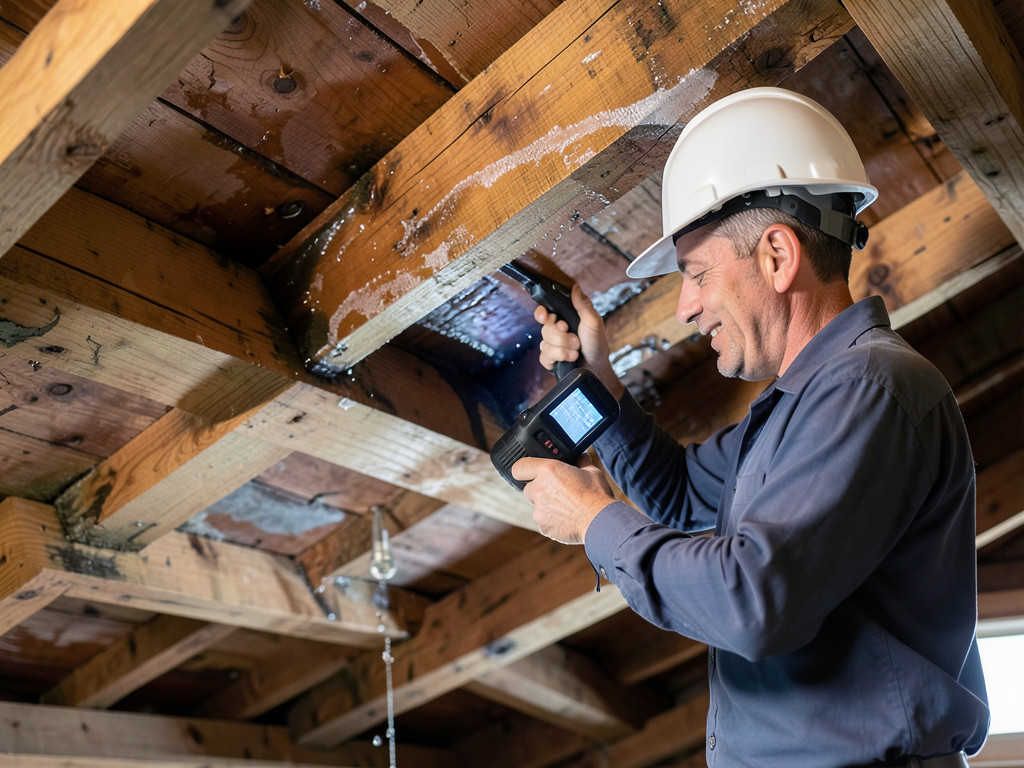
Technician using infrared camera to detect moisture patterns in attic after suspected tile roof leak
Secondary Water Damage: Beyond the Roof
When clay tile roof leaks go undetected they create extensive damage inside your home. Understanding this secondary damage helps you recognize when professional restoration is needed.
Attic mold growth begins within 24 to 48 hours of water intrusion. The warm humid environment of most St. Louis attics provides perfect conditions for mold spores to multiply. Black mold on rafters and insulation indicates a chronic leak problem that has existed for months or years.
Structural wood rot compromises roof integrity. When moisture content in wood exceeds 20 percent fungi begin breaking down cellulose fibers. This process weakens rafters and roof decking making your home vulnerable to collapse during future storms. University City homes with original 1920s lumber are particularly susceptible to advanced rot.
Insulation loses effectiveness when wet. Fiberglass insulation clumps and compresses when saturated reducing its R-value by up to 40 percent. This creates higher energy bills and ice dam formation in winter. Cellulose insulation absorbs water like a sponge and may need complete replacement.
Interior finishes sustain irreversible damage. Water stains on plaster ceilings often cannot be painted over successfully. The stains bleed through standard paint within months. Wallpaper adhesives fail creating bubbling and peeling. Hardwood floors cup and warp when moisture rises from below.
Electrical systems face safety hazards. Water traveling through walls can reach junction boxes and create short circuits. This poses fire risks and may cause intermittent power failures. University City homes with knob and tube wiring from the 1920s are especially vulnerable to water damage.
According to the IICRC S500 standard for water damage restoration Category 2 water from roof leaks requires specialized drying and cleaning procedures to prevent health hazards. This is not a DIY cleanup situation.
Professional Clay Tile Roof Repair Process
Repairing clay tile roofs requires specialized skills and equipment. Here is what professional restoration involves.
Safety preparation takes precedence. Before any work begins technicians install roof safety systems including harnesses anchor points and catch nets below the work area. Clay tiles create falling object hazards that can injure workers and damage property below.
Tile removal requires special tools. Professionals use tile prying bars that fit under the curved edges without breaking adjacent tiles. They work from the top down lifting tiles carefully and stacking them by location for reuse. On average 15 to 20 percent of removed tiles will break during the process requiring replacements.
Underlayment replacement follows ASTM D226 standards. This specification requires minimum 11 mill thickness asphalt saturated organic felt for clay tile applications. Modern synthetic underlayments offer better durability but may not match historic requirements in University City historic district homes.
Flashing and mortar work restores water barriers. Roof valleys require new copper or galvanized steel flashing installed in a woven pattern with tiles. Mortar joints in these areas need repointing with mortar matching the original composition and color.
Tiles are reset using proper fastening methods. Original tiles often use gravity and friction to stay in place. Modern installations may require copper wire loops or tile hooks to meet current wind uplift requirements per the International Building Code Section 1507.
Final testing verifies leak elimination. After repairs are complete the entire roof undergoes water testing to ensure no leaks remain. This includes testing around all repaired areas and common failure points.
Why DIY Tile Repair is Risky
Homeowners often consider repairing clay tile leaks themselves to save money. This approach usually creates more expensive problems.
Clay tiles break easily under inexperienced handling. The average homeowner breaks 40 to 60 percent of the tiles they attempt to remove. Replacement tiles for historic profiles can cost $8 to $15 each and matching the exact color and texture proves difficult.
Improper underlayment installation causes immediate failure. Standard roofing felt is not designed for clay tile applications. Using the wrong material or improper overlaps creates leak paths that may not appear for months but cause extensive damage.
Weight distribution creates structural issues. Clay tile roofs weigh 10 to 12 pounds per square foot compared to 2 to 3 pounds for asphalt shingles. Walking on these roofs without understanding load distribution can crack decking and damage structural members.
Historic district violations result in fines. University City and other St. Louis historic districts require permits and approval for roof work. Unauthorized repairs can result in stop work orders and mandatory restoration to original condition at the homeowner’s expense.
Safety risks include severe injury. Falls from roofs are a leading cause of construction fatalities. Clay tiles create additional hazards as broken pieces become slip and trip hazards. The average medical cost for a roofing fall exceeds $40000.
Professional restoration contractors carry insurance that covers these risks and provides warranties on workmanship. The cost difference between DIY and professional repair often disappears when you factor in replacement tiles and potential damage. How to Get Your St. Louis Home Insurance to Actually Pay for Water Damage.
Preventing Future Clay Tile Roof Leaks
After repairing your clay tile roof take steps to prevent future leaks and extend the system life.
Annual inspections catch problems early. Schedule professional inspections each spring before storm season. Look for cracked tiles displaced mortar and flashing deterioration. Early repairs cost 60 to 70 percent less than emergency restorations.
Clean gutters and valleys prevent water backup. Clogged gutters cause water to back up under roof edges. Clean gutters at least twice yearly and more often if you have trees near your home. University City homes near Forest Park should clean gutters quarterly.
Attic ventilation reduces moisture buildup. Proper ventilation keeps roof temperatures uniform and prevents ice dam formation. Most historic homes need additional vents to meet modern requirements of one square foot of vent per 150 square feet of attic space.
Tree trimming minimizes debris and impact damage. Keep tree branches at least 10 feet from your roof. This prevents leaves from accumulating and reduces the risk of branches falling during storms. It also eliminates pathways for animals to access your roof.
Monitor interior signs of water intrusion. Check your attic monthly for new water stains or mold growth. Look for peeling paint or wallpaper on upper floors. These early warning signs help you address problems before they require major repairs.
Consider underlayment replacement during repairs. If your roof is over 20 years old the underlayment likely needs replacement even if tiles appear good. This preventive measure can extend your roof life by 20 to 30 years.
When to Call for Professional Help
Certain situations require immediate professional intervention to prevent extensive damage.
Active water intrusion demands emergency response. If water is actively entering your home during a storm you need professional tarping and water extraction within 2 to 4 hours. Every hour of delay increases restoration costs by approximately 10 percent.
Mold growth indicates chronic moisture problems. If you see mold on attic rafters or interior walls the leak has existed for months. This requires mold remediation along with roof repair to prevent health hazards.
Structural sagging signals serious damage. If your ceiling or roof shows signs of sagging the underlying structure may be compromised. This requires immediate professional assessment to prevent collapse.
Insurance claims need professional documentation. Insurance companies require detailed damage assessments and repair estimates. Professional restoration companies provide this documentation and often handle insurance negotiations directly.
Historic district compliance requires expertise. University City historic district guidelines specify approved materials and installation methods. Professional contractors understand these requirements and can obtain necessary permits.
Call (314) 428-9977 today to schedule your inspection. Our team responds 24/7 to emergency situations and provides detailed assessments for planned repairs. Do not wait for the next storm to discover your roof cannot handle another heavy rain.
Before and after restoration showing repaired clay tile roof with matching historic profiles and new underlayment installation
Frequently Asked Questions
How long do clay tile roofs last in St. Louis?
Properly maintained clay tile roofs last 50 to 100 years in St. Louis. The tiles themselves often outlast the underlayment which needs replacement every 20 to 30 years. University City homes with original 1920s tiles may need underlayment replacement to prevent leaks.
Can I walk on my clay tile roof to inspect it?
No. Walking directly on clay tiles will break 30 to 40 percent of them. Use binoculars from the ground or hire professionals with proper safety equipment and walk boards that distribute weight across multiple tiles.
How much does clay tile roof repair cost?
Repair costs range from $800 to $3000 for minor leaks depending on accessibility and extent of damage. Complete underlayment replacement with tile resetting costs $12000 to $25000 for an average University City home. These are 2026 estimates and actual costs vary by specific conditions.
Will my insurance cover clay tile roof repairs?
Most homeowner policies cover sudden damage from storms or falling trees. They typically exclude damage from lack of maintenance or normal wear. Check your policy for specific coverage details and document damage thoroughly for claims.
How can I find replacement tiles for my historic roof?
Specialty roofing suppliers and architectural salvage yards often stock vintage clay tiles. Some manufacturers can produce custom matches for discontinued profiles. Professional roofers have sources for matching tiles and can help you find exact replacements for your University City home.
What causes clay tiles to turn white?
White deposits on clay tiles are efflorescence caused by mineral salts migrating to the surface through moisture. This indicates water is moving through the tile system and may signal underlayment failure or poor drainage conditions. Efflorescence on Concrete.
How do I know if my underlayment needs replacement?
Signs include multiple leak locations age over 20 years and visible deterioration in attic spaces. If your roof is over 25 years old and you experience any leaks the underlayment likely needs replacement regardless of tile condition.
Pick up the phone and call (314) 428-9977 before the next storm hits. Our team specializes in historic clay tile roof restoration throughout University City and can provide emergency response when you need it most. Do not let a small leak become a major restoration project. For more information, visit International Building Code.
You may also find this helpful. Salvaging Antique Wood Furniture After a Leak in Your Compton Heights Mansion.
{
“@context”: “https://schema.org”,
“@type”: “BlogPosting”,
“headline”: “Finding and Fixing Leaks in Historic Clay Tile Roofs Around University City”,
“description”: “Expert guide to finding and fixing leaks in historic clay tile roofs in University City. Learn about common causes, repair processes, and water damage restoration from St. Louis specialists.”,
“wordCount”: 2704,
“datePublished”: “2026-05-13T13:53:00.000Z”,
“dateModified”: “2026-05-13T13:53:00.000Z”,
“inLanguage”: “en-US”,
“mainEntityOfPage”: {
“@type”: “WebPage”,
“@id”: “https://patriotwaterdamagerestorationstlouis.com”
},
“publisher”: {
“@type”: “LocalBusiness”,
“name”: “Patriot Water Damage Restoration St. Louis”,
“url”: “https://patriotwaterdamagerestorationstlouis.com”
},
“author”: {
“@type”: “Organization”,
“name”: “Patriot Water Damage Restoration St. Louis”,
“url”: “https://patriotwaterdamagerestorationstlouis.com”
},
“image”: {
“@type”: “ImageObject”,
“url”: “https://patriotwaterdamagerestorationstlouis.com/wp-content/uploads/2026/03/finding-and-fixing-leaks-in-historic-clay-tile-roo-1.png”
}
}
{
“@context”: “https://schema.org”,
“@type”: “LocalBusiness”,
“name”: “Patriot Water Damage Restoration St. Louis”,
“url”: “https://patriotwaterdamagerestorationstlouis.com”,
“address”: {
“@type”: “PostalAddress”,
“addressLocality”: “St. Louis”
},
“areaServed”: {
“@type”: “City”,
“name”: “St. Louis”
}
}
{
“@context”: “https://schema.org”,
“@type”: “FAQPage”,
“mainEntity”: [
{
“@type”: “Question”,
“name”: “How long do clay tile roofs last in St. Louis?”,
“acceptedAnswer”: {
“@type”: “Answer”,
“text”: “Properly maintained clay tile roofs last 50 to 100 years in St. Louis. The tiles themselves often outlast the underlayment which needs replacement every 20 to 30 years. University City homes with original 1920s tiles may need underlayment replacement to prevent leaks.”
}
},
{
“@type”: “Question”,
“name”: “Can I walk on my clay tile roof to inspect it?”,
“acceptedAnswer”: {
“@type”: “Answer”,
“text”: “No. Walking directly on clay tiles will break 30 to 40 percent of them. Use binoculars from the ground or hire professionals with proper safety equipment and walk boards that distribute weight across multiple tiles.”
}
},
{
“@type”: “Question”,
“name”: “How much does clay tile roof repair cost?”,
“acceptedAnswer”: {
“@type”: “Answer”,
“text”: “Repair costs range from $800 to $3000 for minor leaks depending on accessibility and extent of damage. Complete underlayment replacement with tile resetting costs $12000 to $25000 for an average University City home. These are 2026 estimates and actual costs vary by specific conditions.”
}
},
{
“@type”: “Question”,
“name”: “Will my insurance cover clay tile roof repairs?”,
“acceptedAnswer”: {
“@type”: “Answer”,
“text”: “Most homeowner policies cover sudden damage from storms or falling trees. They typically exclude damage from lack of maintenance or normal wear. Check your policy for specific coverage details and document damage thoroughly for claims.”
}
},
{
“@type”: “Question”,
“name”: “How can I find replacement tiles for my historic roof?”,
“acceptedAnswer”: {
“@type”: “Answer”,
“text”: “Specialty roofing suppliers and architectural salvage yards often stock vintage clay tiles. Some manufacturers can produce custom matches for discontinued profiles. Professional roofers have sources for matching tiles and can help you find exact replacements for your University City home.”
}
},
{
“@type”: “Question”,
“name”: “What causes clay tiles to turn white?”,
“acceptedAnswer”: {
“@type”: “Answer”,
“text”: “White deposits on clay tiles are efflorescence caused by mineral salts migrating to the surface through moisture. This indicates water is moving through the tile system and may signal underlayment failure or poor drainage conditions. Efflorescence on Concrete.”
}
},
{
“@type”: “Question”,
“name”: “How do I know if my underlayment needs replacement?”,
“acceptedAnswer”: {
“@type”: “Answer”,
“text”: “Signs include multiple leak locations age over 20 years and visible deterioration in attic spaces. If your roof is over 25 years old and you experience any leaks the underlayment likely needs replacement regardless of tile condition.”
}
}
]
}
{
“@context”: “https://schema.org”,
“@type”: “HowTo”,
“name”: “How to Find Clay Tile Roof Leaks”,
“step”: [
{
“@type”: “HowToStep”,
“position”: 1,
“name”: “Interior inspection”,
“text”: “Start inside your attic during daylight hours. Look for water stains mold growth or daylight shining through the roof deck. Use a moisture meter to check for elevated readings in wood that appears dry to the touch. University City homes with plaster ceilings may show water stains before drywall homes do.”
},
{
“@type”: “HowToStep”,
“position”: 2,
“name”: “Exterior visual survey”,
“text”: “Walk around your home and look for obvious tile damage. Check for missing tiles cracked tiles or tiles with displaced mortar. Pay special attention to roof valleys and areas near chimneys. Use binoculars to inspect steep sections safely.”
},
{
“@type”: “HowToStep”,
“position”: 3,
“name”: “Water testing procedure”,
“text”: “With a helper use a garden hose to simulate rain. Start at the lowest roof area and work upward in sections. Have your helper watch inside for water entry. This process can take 30 to 60 minutes but it isolates the leak source.”
},
{
“@type”: “HowToStep”,
“position”: 4,
“name”: “Underlayment inspection”,
“text”: “If tiles must be removed to inspect underlayment use proper safety equipment and techniques. Clay tiles break easily under foot traffic. Professionals use roof jacks and walk boards to distribute weight. Look for torn underlayment or deteriorated felt.”
},
{
“@type”: “HowToStep”,
“position”: 5,
“name”: “Moisture mapping”,
“text”: “Use infrared cameras or moisture meters to create a map of affected areas. This shows how far water has spread and helps determine if structural repairs are needed.”
}
],
“image”: “https://patriotwaterdamagerestorationstlouis.com/wp-content/uploads/2026/03/finding-and-fixing-leaks-in-historic-clay-tile-roo-1.png”
}
{
“@context”: “https://schema.org”,
“@type”: “BreadcrumbList”,
“itemListElement”: [
{
“@type”: “ListItem”,
“position”: 1,
“name”: “Home”,
“item”: “https://patriotwaterdamagerestorationstlouis.com”
},
{
“@type”: “ListItem”,
“position”: 2,
“name”: “Blog”,
“item”: “https://patriotwaterdamagerestorationstlouis.com/blog”
},
{
“@type”: “ListItem”,
“position”: 3,
“name”: “Finding and Fixing Leaks in Historic Clay Tile Roofs Around University City”
}
]
}
{
“@context”: “https://schema.org”,
“@type”: “Service”,
“serviceType”: “Water Damage Restoration”,
“provider”: {
“@type”: “LocalBusiness”,
“name”: “Patriot Water Damage Restoration St. Louis”,
“url”: “https://patriotwaterdamagerestorationstlouis.com”
},
“areaServed”: {
“@type”: “City”,
“name”: “St. Louis”
},
“description”: “Expert guide to finding and fixing leaks in historic clay tile roofs in University City. Learn about common causes, repair processes, and water damage restoration from St. Louis specialists.”
}