
Questions You Must Ask Before Hiring a Water Restoration Team in the St. Louis Area
Water damage strikes without warning in St. Louis homes. A burst pipe during a January freeze or a flash flood from a summer thunderstorm can turn your living room into a swamp within hours. The first 24-48 hours determine whether you’re looking at a simple cleanup or a $50,000 mold remediation project. That’s why choosing the right water restoration team matters more than you think. How to Get Your St. Louis Home Insurance to Actually Pay for Water Damage.
Most homeowners make critical mistakes when hiring water damage contractors. They focus on price instead of credentials. They assume all companies have the same equipment. They don’t verify insurance coverage. These oversights cost St. Louis families thousands in secondary damage that could have been prevented. Professional Water Extraction and Drying for St. Charles Residents.
Before you sign any contract, you need to ask these five questions. Your home’s structural integrity and your family’s health depend on getting the right answers.
Question 1: Are You IICRC Certified and What Specific Training Do Your Technicians Have?
Water damage restoration isn’t just about removing water. It’s a science that requires understanding psychrometrics, moisture mapping, and structural drying principles. The Institute of Inspection Cleaning and Restoration Certification (IICRC) sets the industry standard for this work. IICRC certification standards.
Ask for specific certifications beyond the basic IICRC Water Damage Restoration Technician (WRT) credential. Look for Applied Structural Drying (ASD) and Applied Microbial Remediation Technician (AMRT) certifications. These indicate the team understands how to dry walls from the inside out and prevent mold growth in St. Louis’s humid climate. Water Damage Restoration Manchester.
Missouri doesn’t require state licensing for water restoration contractors, but St. Louis County and the City of St. Louis have specific permit requirements for structural modifications during restoration. A certified team knows these local regulations and obtains proper permits before starting work.. Read more about Navigating Water Damage Responsibilities in Lafayette Square Condos and Shared Buildings.
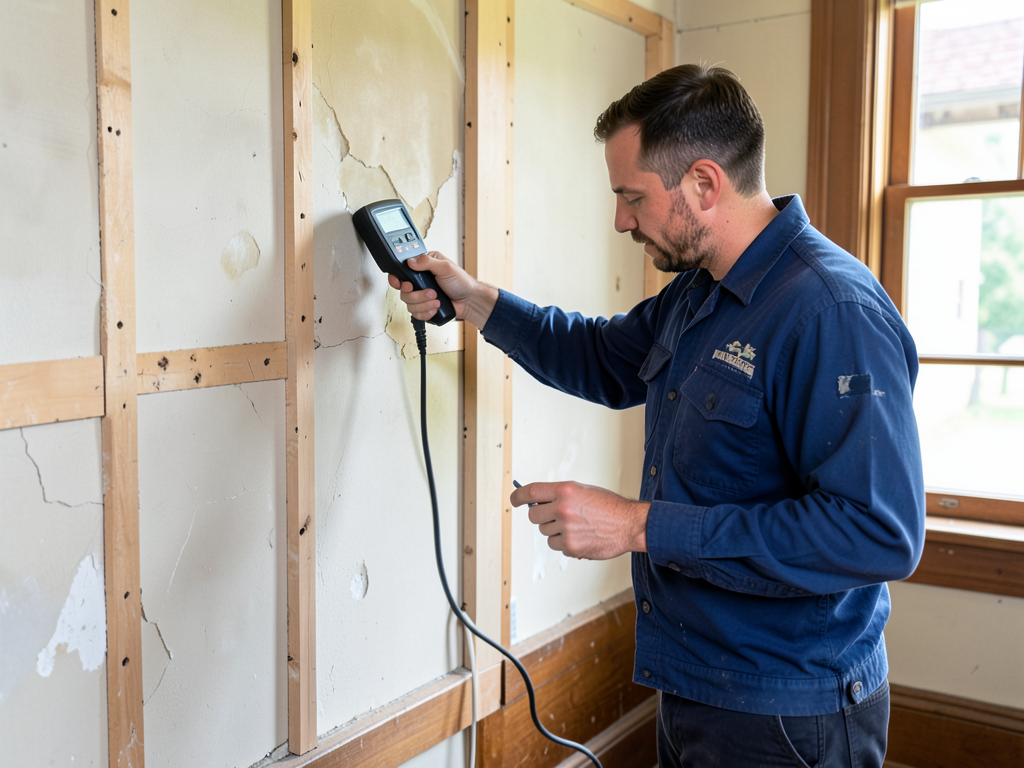
A technician uses a moisture meter to detect hidden water in wall cavities behind lath-and-plaster walls common in St. Louis’s historic neighborhoods. Removing Mold from Historic Central West End Homes Without Damaging the Architecture.
Question 2: What’s Your Response Time and Do You Have 24/7 Emergency Service?
Water damage follows a predictable timeline. Within 24 hours, drywall begins absorbing moisture and swelling. By 48 hours, mold spores activate in St. Louis’s 70% average humidity. After 72 hours, structural wood components start warping and weakening.. Read more about Can You Successfully Sell a House in St. Louis That Has a History of Basement Flooding?.
The industry standard for emergency response is 60 minutes or less. Ask the company to guarantee this response time in writing. Many St. Louis companies advertise 24/7 service but actually have dispatch centers in other states that take hours to send local crews.
Local companies like Patriot Water Damage Restoration maintain fully staffed dispatch centers in St. Louis and keep technicians on-call throughout the metro area. They can reach most St. Louis County locations within 45 minutes and St. Charles County within 60 minutes.
During major weather events like the 2023 flash floods that hit Chesterfield and Creve Coeur, response times stretch to 2-3 hours. Ask how the company prioritizes calls during regional emergencies. Do they have enough equipment and personnel to handle multiple simultaneous disasters?
Question 3: Do You Work Directly with Insurance Companies and Use Xactimate Pricing?
Insurance claims for water damage involve complex documentation requirements. The adjuster needs detailed moisture maps, before-and-after photos, and itemized estimates. Without proper documentation, even legitimate claims get denied.
Ask if the company uses Xactimate, the industry-standard estimating software that insurance companies recognize. Companies using Xactimate can often bill insurance directly, eliminating out-of-pocket expenses for homeowners. This process requires specific training and certification that many small contractors lack.
St. Louis homeowners with State Farm, American Family, or USAA policies need contractors experienced with these specific insurers. Each company has different documentation requirements and approval processes. A contractor who’s handled 100 claims with your insurance provider knows exactly what documentation prevents delays.
Request references from local homeowners who’ve used the company’s insurance liaison services. Ask about claim approval rates and whether the company ever asks customers to pay the difference between their estimate and the insurance payout.
Question 4: What Equipment Do You Use and How Do You Monitor Drying Progress?
Water restoration requires industrial-grade equipment that most homeowners don’t recognize. Ask about specific equipment brands and capacities. Low-grain refrigerant (LGR) dehumidifiers remove more moisture per hour than standard units. Axial air movers create better airflow patterns for drying walls and under cabinets.
Professional monitoring involves daily moisture readings from multiple locations. The technician should show you a moisture map documenting progress. They should explain psychrometric calculations showing how temperature, humidity, and air movement affect drying rates.
Ask about thermal imaging cameras for detecting hidden moisture in walls and under floors. These cameras can find water that traditional moisture meters miss, preventing future mold growth behind finished walls.
St. Louis’s clay soil and high water table create unique challenges. Water migrates through basement walls differently than in sandy soil areas. The company should explain how they adjust drying strategies for local soil conditions.
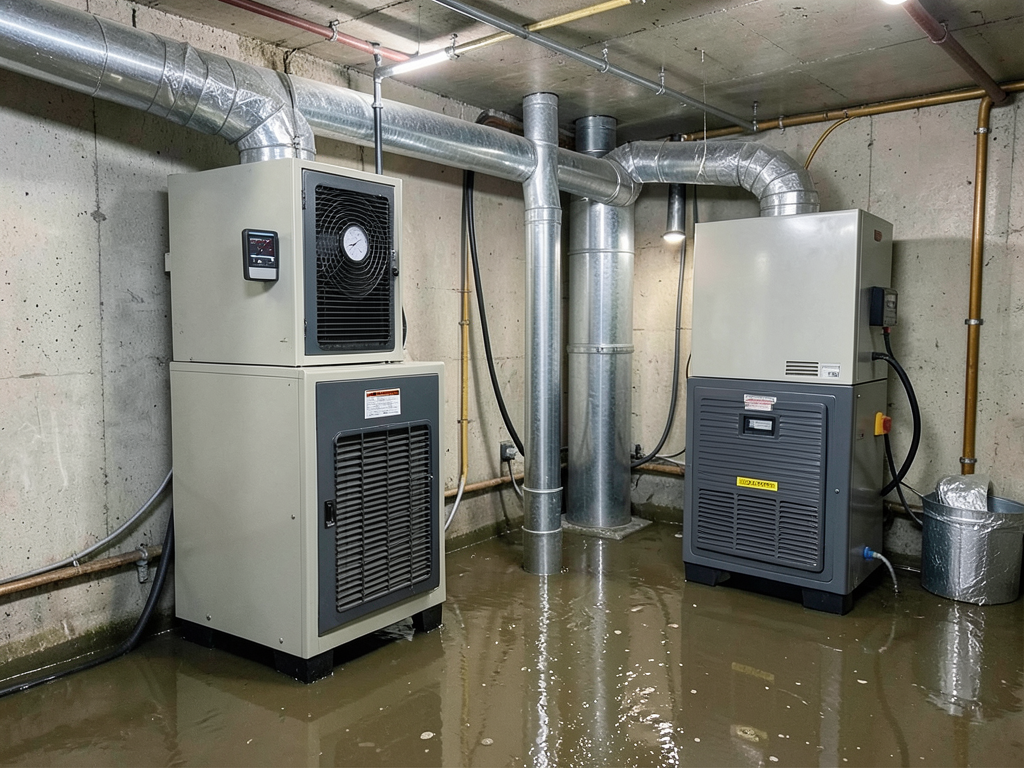
Industrial air movers and dehumidifiers create a drying chamber in a flooded basement, with moisture meters monitoring progress every 24 hours.
Question 5: What’s Your Guarantee and How Do You Handle Mold Prevention?
Water damage restoration requires a warranty that covers secondary damage. Ask for a written guarantee that covers mold growth within 90 days if it results from incomplete drying. Many companies offer only 30-day warranties, which isn’t enough time for mold to become visible in St. Louis’s climate.
Ask about antimicrobial treatments and their effectiveness. Some companies use bleach solutions that actually feed mold growth. Professional companies use EPA-registered antimicrobials specifically formulated for water damage restoration. EPA mold remediation guidelines.
St. Louis’s humidity levels (averaging 70% year-round) create perfect conditions for mold growth if drying isn’t complete. The company should explain how they verify drying goals are met before removing equipment. This involves specific moisture content readings for different materials.
Ask about air quality testing after restoration. Some companies offer third-party testing to verify that mold spores haven’t increased during the restoration process. This testing costs extra but provides peace of mind for families with allergies or respiratory issues.
The Cost of Choosing the Wrong Company
Choosing an unqualified water restoration team based on the lowest bid can cost you 3-5 times more in the long run. A $3,000 job that leaves moisture in wall cavities becomes a $15,000 mold remediation project within months.
St. Louis homeowners have reported cases where cheap contractors removed visible water but left moisture in insulation and subfloors. The resulting mold growth required removing entire walls and floors six months later.
Insurance companies often deny claims for secondary damage when homeowners use unlicensed contractors. They argue that proper restoration would have prevented the additional damage. This leaves homeowners paying for both the initial cleanup and the subsequent mold remediation.
A moisture map shows drying progress across a flooded home, with green indicating acceptable moisture levels and red showing areas needing additional drying.
Local Water Damage Challenges in St. Louis
St. Louis’s unique geography creates specific water damage risks. The Mississippi and Missouri Rivers’ proximity means high water tables in many neighborhoods. Clay soil expands when wet, putting pressure on basement walls and creating foundation cracks that allow water intrusion.
The Metropolitan St. Louis Sewer District’s aging infrastructure causes sewer backups during heavy rains. Homes built before 1970 often have combined sewer systems that overflow into basements. A qualified restoration company understands these local infrastructure issues and knows when to involve MSD.
Historic neighborhoods like Soulard and Lafayette Square have unique restoration challenges. Many homes have original wood floors and plaster walls that require specialized drying techniques to prevent permanent damage.
St. Louis’s freeze-thaw cycles cause more pipe bursts than in warmer climates. January temperatures often fluctuate above and below freezing, causing pipes to expand and contract until they fail. This creates different water damage patterns than a single catastrophic event. Who to Call When Your Pipes Burst in Kirkwood This Winter.
Red Flags to Watch For
Be wary of companies that ask for large upfront payments. Reputable restoration companies work with insurance and only require payment after the claim is approved. A request for $1,000-$2,000 upfront often indicates a scam or a company with cash flow problems.
Avoid companies that can’t provide local references. Water damage restoration is a local business. Companies operating from out of state often lack knowledge of local building codes and insurance requirements.
Watch for vague contracts that don’t specify drying goals or timelines. Professional contracts include specific moisture content targets and daily monitoring requirements. They also outline what happens if secondary damage occurs.
Be suspicious of companies that recommend extensive demolition without proper testing. Some contractors remove more material than necessary to increase their bill. A qualified technician uses moisture meters and thermal imaging to determine exactly what needs removal.
Making Your Final Decision
After asking these questions, compare responses from multiple companies. Don’t just look at price. Consider response time guarantees, equipment quality, insurance experience, and warranty terms. A company that’s $200 more expensive but guarantees 60-minute response and uses proper equipment often saves you thousands in prevented damage.
Trust your instincts. If a company seems evasive about credentials or guarantees, move on. Water damage restoration requires technical expertise that legitimate companies are happy to demonstrate.
Remember that the cheapest option often costs the most. Water damage restoration isn’t the place to save money by cutting corners. The right company prevents secondary damage that could cost you your home’s value and your family’s health.
Don’t Wait Until Disaster Strikes
Most homeowners don’t think about water restoration companies until they need one. By then, they’re making decisions under stress while water continues damaging their home. Take time now to research qualified companies in your area.
Save the phone number of a reputable company in your contacts. When water starts pouring through your ceiling at 2 AM, you won’t have time to search online or read reviews. You need someone who can arrive within the hour with the right equipment.
Consider asking about preventive services like sump pump inspections or basement waterproofing consultations. Many water restoration companies also offer these services to help prevent future damage.
Call (314) 428-9977 today to schedule a consultation or save this number for emergencies. Don’t let water damage destroy your St. Louis home.
Frequently Asked Questions
How much does water damage restoration cost in St. Louis?
Costs vary widely based on damage extent and required services. Minor clean water damage might cost $1,500-$3,000, while extensive sewage backup could exceed $10,000. Most companies provide free estimates after assessing the damage.
How long does the water restoration process take?
Initial water extraction takes 4-8 hours. Structural drying typically requires 3-5 days with equipment running continuously. Complete restoration, including repairs, can take 2-6 weeks depending on damage severity and insurance approval timelines.
Will my homeowner’s insurance cover water damage?
Most policies cover sudden, accidental water damage from burst pipes or appliance failures. They typically don’t cover flooding, sewer backups, or gradual leaks. Review your policy or contact your insurance agent to understand your specific coverage.
Can I stay in my home during restoration?
It depends on damage extent and affected areas. You can usually stay if only part of the home is affected and there are no safety hazards. Severe damage or contamination may require temporary relocation during restoration.
How do I know when my home is completely dry?
Professional companies use moisture meters to verify materials have returned to normal moisture content. They establish drying goals for each material type and continue monitoring until all goals are met. Visual dryness doesn’t guarantee structural dryness.
{
“@context”: “https://schema.org”,
“@type”: “BlogPosting”,
“headline”: “Questions You Must Ask Before Hiring a Water Restoration Team in the St. Louis Area”,
“description”: “Don’t let water damage destroy your St. Louis home. Learn the 5 critical questions to ask before hiring a water restoration team. Call (314) 428-9977 for 24/7 emergency service.”,
“wordCount”: 1963,
“datePublished”: “2026-03-11T12:33:00.000Z”,
“dateModified”: “2026-03-11T12:33:00.000Z”,
“inLanguage”: “en-US”,
“mainEntityOfPage”: {
“@type”: “WebPage”,
“@id”: “https://patriotwaterdamagerestorationstlouis.com”
},
“publisher”: {
“@type”: “LocalBusiness”,
“name”: “Patriot Water Damage Restoration St. Louis”,
“url”: “https://patriotwaterdamagerestorationstlouis.com”
},
“author”: {
“@type”: “Organization”,
“name”: “Patriot Water Damage Restoration St. Louis”,
“url”: “https://patriotwaterdamagerestorationstlouis.com”
},
“image”: {
“@type”: “ImageObject”,
“url”: “https://patriotwaterdamagerestorationstlouis.com/wp-content/uploads/2026/03/questions-you-must-ask-before-hiring-a-water-resto-1.png”
}
}
{
“@context”: “https://schema.org”,
“@type”: “LocalBusiness”,
“name”: “Patriot Water Damage Restoration St. Louis”,
“url”: “https://patriotwaterdamagerestorationstlouis.com”,
“address”: {
“@type”: “PostalAddress”,
“addressLocality”: “St. Louis”
},
“areaServed”: {
“@type”: “City”,
“name”: “St. Louis”
}
}
{
“@context”: “https://schema.org”,
“@type”: “FAQPage”,
“mainEntity”: [
{
“@type”: “Question”,
“name”: “Question 1: Are You IICRC Certified and What Specific Training Do Your Technicians Have?”,
“acceptedAnswer”: {
“@type”: “Answer”,
“text”: “Water damage restoration isn’t just about removing water. It’s a science that requires understanding psychrometrics, moisture mapping, and structural drying principles. The Institute of Inspection Cleaning and Restoration Certification (IICRC) sets the industry standard for this work. IICRC certification standards.”
}
},
{
“@type”: “Question”,
“name”: “Question 2: What’s Your Response Time and Do You Have 24/7 Emergency Service?”,
“acceptedAnswer”: {
“@type”: “Answer”,
“text”: “Water damage follows a predictable timeline. Within 24 hours, drywall begins absorbing moisture and swelling. By 48 hours, mold spores activate in St. Louis’s 70% average humidity. After 72 hours, structural wood components start warping and weakening.”
}
},
{
“@type”: “Question”,
“name”: “Question 3: Do You Work Directly with Insurance Companies and Use Xactimate Pricing?”,
“acceptedAnswer”: {
“@type”: “Answer”,
“text”: “Insurance claims for water damage involve complex documentation requirements. The adjuster needs detailed moisture maps, before-and-after photos, and itemized estimates. Without proper documentation, even legitimate claims get denied.”
}
},
{
“@type”: “Question”,
“name”: “Question 4: What Equipment Do You Use and How Do You Monitor Drying Progress?”,
“acceptedAnswer”: {
“@type”: “Answer”,
“text”: “Water restoration requires industrial-grade equipment that most homeowners don’t recognize. Ask about specific equipment brands and capacities. Low-grain refrigerant (LGR) dehumidifiers remove more moisture per hour than standard units. Axial air movers create better airflow patterns for drying walls and under cabinets.”
}
},
{
“@type”: “Question”,
“name”: “Question 5: What’s Your Guarantee and How Do You Handle Mold Prevention?”,
“acceptedAnswer”: {
“@type”: “Answer”,
“text”: “Water damage restoration requires a warranty that covers secondary damage. Ask for a written guarantee that covers mold growth within 90 days if it results from incomplete drying. Many companies offer only 30-day warranties, which isn’t enough time for mold to become visible in St. Louis’s climate.”
}
},
{
“@type”: “Question”,
“name”: “How much does water damage restoration cost in St. Louis?”,
“acceptedAnswer”: {
“@type”: “Answer”,
“text”: “Costs vary widely based on damage extent and required services. Minor clean water damage might cost $1,500-$3,000, while extensive sewage backup could exceed $10,000. Most companies provide free estimates after assessing the damage.”
}
},
{
“@type”: “Question”,
“name”: “How long does the water restoration process take?”,
“acceptedAnswer”: {
“@type”: “Answer”,
“text”: “Initial water extraction takes 4-8 hours. Structural drying typically requires 3-5 days with equipment running continuously. Complete restoration, including repairs, can take 2-6 weeks depending on damage severity and insurance approval timelines.”
}
},
{
“@type”: “Question”,
“name”: “Will my homeowner’s insurance cover water damage?”,
“acceptedAnswer”: {
“@type”: “Answer”,
“text”: “Most policies cover sudden, accidental water damage from burst pipes or appliance failures. They typically don’t cover flooding, sewer backups, or gradual leaks. Review your policy or contact your insurance agent to understand your specific coverage.”
}
},
{
“@type”: “Question”,
“name”: “Can I stay in my home during restoration?”,
“acceptedAnswer”: {
“@type”: “Answer”,
“text”: “It depends on damage extent and affected areas. You can usually stay if only part of the home is affected and there are no safety hazards. Severe damage or contamination may require temporary relocation during restoration.”
}
},
{
“@type”: “Question”,
“name”: “How do I know when my home is completely dry?”,
“acceptedAnswer”: {
“@type”: “Answer”,
“text”: “Professional companies use moisture meters to verify materials have returned to normal moisture content. They establish drying goals for each material type and continue monitoring until all goals are met. Visual dryness doesn’t guarantee structural dryness.”
}
}
]
}
{
“@context”: “https://schema.org”,
“@type”: “BreadcrumbList”,
“itemListElement”: [
{
“@type”: “ListItem”,
“position”: 1,
“name”: “Home”,
“item”: “https://patriotwaterdamagerestorationstlouis.com”
},
{
“@type”: “ListItem”,
“position”: 2,
“name”: “Blog”,
“item”: “https://patriotwaterdamagerestorationstlouis.com/blog”
},
{
“@type”: “ListItem”,
“position”: 3,
“name”: “Questions You Must Ask Before Hiring a Water Restoration Team in the St. Louis Area”
}
]
}
{
“@context”: “https://schema.org”,
“@type”: “Service”,
“serviceType”: “Water Damage Restoration”,
“provider”: {
“@type”: “LocalBusiness”,
“name”: “Patriot Water Damage Restoration St. Louis”,
“url”: “https://patriotwaterdamagerestorationstlouis.com”
},
“areaServed”: {
“@type”: “City”,
“name”: “St. Louis”
},
“description”: “Don’t let water damage destroy your St. Louis home. Learn the 5 critical questions to ask before hiring a water restoration team. Call (314) 428-9977 for 24/7 emergency service.”
}