
The First Three Things You Must Do if Your Ballwin Basement Floods
Water gushing into your basement creates panic. Every minute matters. This guide shows you the exact three steps Ballwin homeowners need to take immediately after flooding to protect your family and property. The clock starts ticking the second water enters your home. Professional Water Extraction and Drying for St. Charles Residents.
Ballwin’s clay-heavy Missouri soil combined with the area’s aging infrastructure creates unique flood risks. Homes near Fishpot Creek and those on Manchester Road’s older developments face higher water table pressures during heavy storms. Understanding these local conditions helps you respond faster when disaster strikes. Water Damage Restoration Manchester.
Step One: Ensure Your Safety Before Anything Else
Before grabbing towels or checking damage, assess immediate hazards. Floodwater in Ballwin basements often contains sewage from MSD sewer backups or chemicals from household products. Never walk through standing water without proper protection.. Read more about How to Get the Water Out of Your Flooded St. Louis Basement Fast.
Turn off electricity at the main breaker if water reaches outlets or appliances. Ballwin’s older homes along Westglen Drive and Castle Point often have outdated electrical systems that increase shock risks. If you smell gas or see sparks, evacuate immediately and call emergency services from outside.
Wear rubber boots and gloves if you must enter the flooded area. Document everything with photos before touching anything. This documentation proves crucial for insurance claims later. Ballwin’s proximity to the Meramec River basin means many homeowners face similar situations, but your specific damage patterns matter for proper restoration. How to Get Your St. Louis Home Insurance to Actually Pay for Water Damage.
Step Two: Stop the Water Source Immediately
Identify where water enters your basement. Ballwin homes commonly flood from three sources: sump pump failure during power outages, sewer line backups during heavy storms, or foundation cracks from clay soil expansion.
Check your sump pump first. Many Ballwin neighborhoods like Oak Tree Farm experience power failures during thunderstorms. If your pump stopped working, locate the manual override or battery backup. For sewer backups, which plague older Ballwin developments near the original town center, avoid using any plumbing fixtures upstairs.
Foundation leaks often appear as water seeping through walls or floor cracks. Ballwin’s Missouri red clay expands when wet, creating pressure that forces water through even tiny foundation gaps. Temporary measures include using hydraulic cement or waterproof sealants, but these are stopgaps until professionals arrive.
Step Three: Call Professional Water Damage Restoration
Time becomes your enemy after the first hour. Mold begins growing within 24-48 hours in Ballwin’s humid climate. Professional restoration teams use industrial-grade equipment that removes water and moisture far faster than household fans and dehumidifiers.
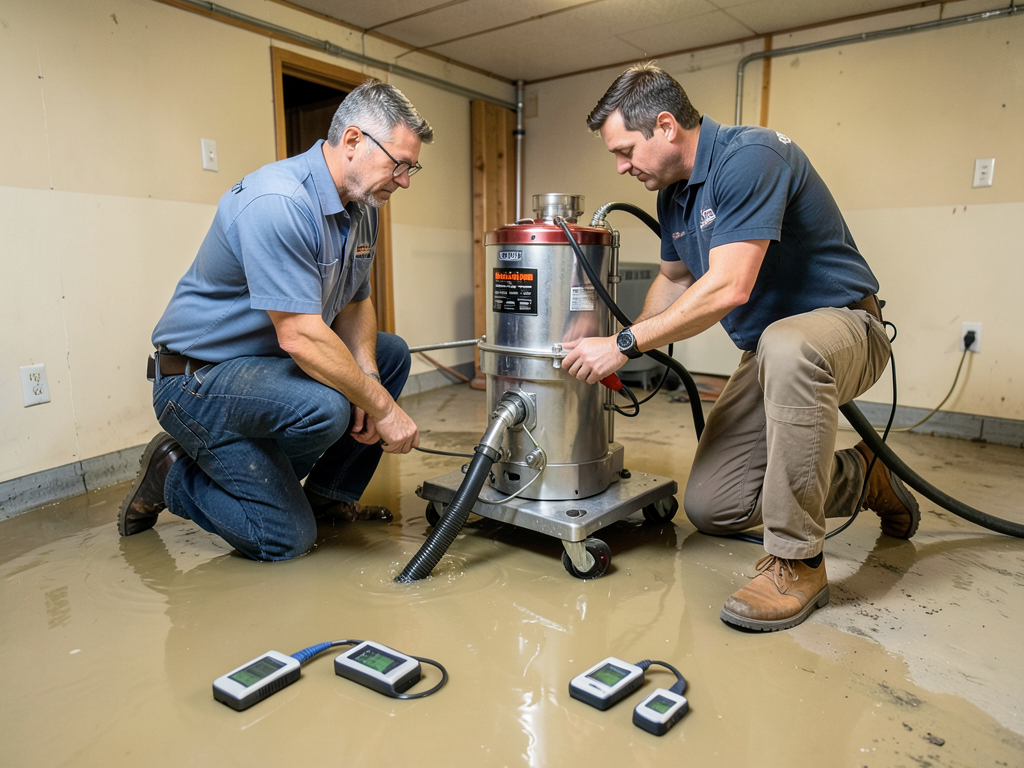
Professional water extraction uses truck-mounted pumps capable of removing thousands of gallons per hour. These machines far exceed the capacity of rental shop vacs. Ballwin’s humid summers mean natural evaporation takes weeks, but professional drying systems can reduce this to 3-5 days. Removing Mold from Historic Central West End Homes Without Damaging the Architecture.
Certified technicians follow IICRC S500 standards for water damage restoration. This industry standard ensures proper drying, prevents mold growth, and documents the process for insurance purposes. Ballwin homeowners working with certified professionals typically recover more from insurance claims than those attempting DIY cleanup.
Understanding Ballwin’s Unique Flood Risks
Ballwin sits in a geographic sweet spot for basement flooding. The area’s clay soil, combined with the Meramec River basin’s water table fluctuations, creates perfect conditions for water intrusion. Homes built before 1980 often lack proper drainage systems that newer constructions include.
MSD’s aging sewer infrastructure in older Ballwin neighborhoods causes frequent backups during heavy rainfall. The system combines stormwater and sewage in many areas, overwhelming pipes when rain exceeds design capacity. This creates Category 3 water damage situations requiring specialized cleanup protocols. Who to Call When Your Pipes Burst in Kirkwood This Winter.
Fishpot Creek’s watershed affects Ballwin’s eastern neighborhoods. When the creek rises during storms, groundwater levels increase throughout the area. Homes near the creek’s natural flow path experience the most severe flooding, often with water entering through foundation walls rather than floor drains.
The Science Behind Professional Water Extraction
Professional restoration goes beyond pumping water. Technicians use psychrometry to measure air moisture content and determine optimal drying conditions. This science-based approach ensures complete moisture removal, preventing structural damage and mold growth.
Industrial air movers create high-velocity airflow that evaporates moisture from surfaces and materials. These machines move air at speeds that household fans cannot achieve. Combined with commercial dehumidifiers, they create conditions where water evaporates faster than it can reabsorb into building materials.
Moisture meters detect hidden water in walls, under flooring, and within insulation. Ballwin’s older homes often contain multiple layers of materials that trap moisture. Professional testing ensures no water remains hidden, which would cause problems months later.
Insurance Considerations for Ballwin Homeowners
Standard homeowners insurance in Ballwin covers sudden water damage from burst pipes but excludes groundwater flooding and sewer backups. Many Ballwin residents discover this gap only after experiencing basement flooding.
Separate flood insurance through the National Flood Insurance Program covers groundwater intrusion. However, Ballwin’s location outside designated flood zones means many homeowners skip this coverage. The decision often proves costly when heavy storms overwhelm local drainage systems. EPA Mold Guidelines.
Sewer backup riders add coverage for MSD-related flooding. Given Ballwin’s aging infrastructure, this inexpensive addition provides crucial protection. Professional restoration companies document damage thoroughly, helping maximize insurance claim recovery.
Common Mistakes Ballwin Homeowners Make
Delaying professional help ranks as the most costly mistake. Many Ballwin residents attempt to handle basement flooding themselves, not realizing that hidden moisture causes more damage than visible water. By the time problems become apparent, restoration costs multiply.
Using household bleach for disinfection creates dangerous chemical reactions in flooded basements. Professional antimicrobial treatments are specifically formulated for water damage scenarios. Ballwin’s older homes often contain materials that react poorly to improper cleaning chemicals.
Removing wet drywall without proper containment spreads mold spores throughout the home. Professional containment barriers prevent cross-contamination. Ballwin’s humid climate means mold grows rapidly once established, making containment crucial.
What to Expect During Professional Restoration
Professional restoration follows a systematic process. First, technicians assess damage extent using moisture meters and thermal imaging cameras. These tools detect water hidden behind walls or under flooring that homeowners cannot see.
Water extraction removes standing water using powerful truck-mounted pumps. Ballwin’s basement flooding often involves several inches of water, requiring industrial equipment for complete removal. The process typically takes 2-4 hours depending on basement size and water volume.
Drying and dehumidification follow extraction. Industrial dehumidifiers remove moisture from air and materials. Air movers circulate dry air throughout the space. This phase lasts 3-5 days in Ballwin’s humid climate, ensuring complete moisture removal before reconstruction begins.
Preventing Future Basement Flooding
Prevention starts with understanding your home’s vulnerabilities. Ballwin’s clay soil puts pressure on foundations, creating cracks over time. Regular foundation inspections identify problems before they cause flooding.
Proper sump pump maintenance prevents failures during critical moments. Test your pump monthly by pouring water into the pit. Replace batteries in backup systems annually. Ballwin’s storm patterns mean pumps work hardest during summer months when families are often away on vacation.
Landscape grading directs water away from your foundation. Ballwin’s rolling terrain means some homes sit lower than surrounding properties. Proper grading prevents surface water from pooling near foundation walls during heavy rains.
Cost Factors for Basement Flood Restoration
Restoration costs vary based on water category, damage extent, and response time. Category 1 water from clean sources costs less to remediate than Category 3 sewage water. Ballwin’s older homes often contain materials requiring specialized handling, affecting overall costs.
Response time dramatically impacts restoration expenses. Water sitting for 48 hours requires mold remediation, doubling or tripling cleanup costs. Ballwin’s humid climate accelerates mold growth compared to drier regions.
Insurance coverage affects out-of-pocket expenses. Homes with proper coverage often pay only deductibles, while uninsured properties face full restoration costs. Professional companies provide detailed estimates and work directly with insurance adjusters.
Emergency Contact Information
Keep emergency numbers readily available. Water damage requires immediate professional response. Waiting until morning often means facing significantly higher restoration costs and more extensive damage.
Professional restoration companies offer 24/7 emergency service. Ballwin residents should choose companies familiar with local building codes and insurance requirements. Local knowledge ensures faster response times and proper documentation for claims.
Document all communications with restoration companies. Keep records of phone calls, emails, and text messages. This documentation proves valuable if disputes arise about services performed or costs incurred.
Frequently Asked Questions
How long does professional basement flood cleanup take in Ballwin?
Initial water extraction takes 2-4 hours. Complete drying requires 3-5 days in Ballwin’s humid climate. Total restoration, including repairs, typically takes 1-2 weeks depending on damage extent and material availability.
Will my Ballwin homeowners insurance cover basement flooding?
Standard policies cover sudden internal water damage but exclude groundwater flooding and sewer backups. Many Ballwin homeowners need separate flood insurance or sewer backup riders for complete coverage.
How much does basement flood cleanup cost in Ballwin?
Costs range from $1,500 to $10,000 depending on water category, damage extent, and response time. Category 3 sewage water cleanup costs significantly more than clean water extraction due to contamination risks.
Can I clean up basement flooding myself?
Small clean water spills might be manageable, but larger floods require professional equipment and expertise. DIY cleanup often misses hidden moisture, leading to mold growth and structural damage within weeks.
How do I prevent basement flooding in Ballwin?
Maintain sump pumps, ensure proper grading, install backwater valves, and consider foundation waterproofing. Ballwin’s clay soil and aging infrastructure make prevention crucial for avoiding costly flood damage.
Take Action Now
Water in your basement creates an emergency that worsens by the minute. Every hour of delay increases damage extent and restoration costs. Ballwin’s unique soil conditions and aging infrastructure mean local homeowners face specific flood risks requiring immediate professional attention.
Don’t wait until morning or try handling this yourself. Professional restoration teams arrive within 60 minutes, equipped with industrial-grade equipment that removes water and moisture far faster than any DIY approach. Ballwin’s humid climate means mold begins growing within 24-48 hours, making rapid response crucial.
Pick up the phone and call (314) 428-9977 before the next storm hits. Our certified technicians understand Ballwin’s specific flood risks and follow IICRC S500 standards to ensure complete restoration. We work directly with insurance companies to maximize your claim recovery and minimize your stress.
Your home and family deserve immediate protection from water damage. One call provides peace of mind and starts the restoration process that protects your Ballwin home’s value and your family’s health. For more information, visit FEMA Flood Insurance Information.
{
“@context”: “https://schema.org”,
“@type”: “BlogPosting”,
“headline”: “The First Three Things You Must Do if Your Ballwin Basement Floods”,
“description”: “Discover the 3 critical steps every Ballwin homeowner must take immediately after basement flooding. Learn emergency water extraction, safety protocols, and when to call (314) 428-9977 for 24/7 professional help.”,
“wordCount”: 1781,
“datePublished”: “2026-02-27T13:16:00.000Z”,
“dateModified”: “2026-02-27T13:16:00.000Z”,
“inLanguage”: “en-US”,
“mainEntityOfPage”: {
“@type”: “WebPage”,
“@id”: “https://patriotwaterdamagerestorationstlouis.com”
},
“publisher”: {
“@type”: “LocalBusiness”,
“name”: “Patriot Water Damage Restoration St. Louis”,
“url”: “https://patriotwaterdamagerestorationstlouis.com”
},
“author”: {
“@type”: “Organization”,
“name”: “Patriot Water Damage Restoration St. Louis”,
“url”: “https://patriotwaterdamagerestorationstlouis.com”
},
“image”: {
“@type”: “ImageObject”,
“url”: “https://patriotwaterdamagerestorationstlouis.com/wp-content/uploads/2026/03/the-first-three-things-you-must-do-if-your-ballwin-1.png”
}
}
{
“@context”: “https://schema.org”,
“@type”: “LocalBusiness”,
“name”: “Patriot Water Damage Restoration St. Louis”,
“url”: “https://patriotwaterdamagerestorationstlouis.com”,
“address”: {
“@type”: “PostalAddress”,
“addressLocality”: “St. Louis”
},
“areaServed”: {
“@type”: “City”,
“name”: “St. Louis”
}
}
{
“@context”: “https://schema.org”,
“@type”: “FAQPage”,
“mainEntity”: [
{
“@type”: “Question”,
“name”: “How long does professional basement flood cleanup take in Ballwin?”,
“acceptedAnswer”: {
“@type”: “Answer”,
“text”: “Initial water extraction takes 2-4 hours. Complete drying requires 3-5 days in Ballwin’s humid climate. Total restoration, including repairs, typically takes 1-2 weeks depending on damage extent and material availability.”
}
},
{
“@type”: “Question”,
“name”: “Will my Ballwin homeowners insurance cover basement flooding?”,
“acceptedAnswer”: {
“@type”: “Answer”,
“text”: “Standard policies cover sudden internal water damage but exclude groundwater flooding and sewer backups. Many Ballwin homeowners need separate flood insurance or sewer backup riders for complete coverage.”
}
},
{
“@type”: “Question”,
“name”: “How much does basement flood cleanup cost in Ballwin?”,
“acceptedAnswer”: {
“@type”: “Answer”,
“text”: “Costs range from $1,500 to $10,000 depending on water category, damage extent, and response time. Category 3 sewage water cleanup costs significantly more than clean water extraction due to contamination risks.”
}
},
{
“@type”: “Question”,
“name”: “Can I clean up basement flooding myself?”,
“acceptedAnswer”: {
“@type”: “Answer”,
“text”: “Small clean water spills might be manageable, but larger floods require professional equipment and expertise. DIY cleanup often misses hidden moisture, leading to mold growth and structural damage within weeks.”
}
},
{
“@type”: “Question”,
“name”: “How do I prevent basement flooding in Ballwin?”,
“acceptedAnswer”: {
“@type”: “Answer”,
“text”: “Maintain sump pumps, ensure proper grading, install backwater valves, and consider foundation waterproofing. Ballwin’s clay soil and aging infrastructure make prevention crucial for avoiding costly flood damage.”
}
}
]
}
{
“@context”: “https://schema.org”,
“@type”: “BreadcrumbList”,
“itemListElement”: [
{
“@type”: “ListItem”,
“position”: 1,
“name”: “Home”,
“item”: “https://patriotwaterdamagerestorationstlouis.com”
},
{
“@type”: “ListItem”,
“position”: 2,
“name”: “Blog”,
“item”: “https://patriotwaterdamagerestorationstlouis.com/blog”
},
{
“@type”: “ListItem”,
“position”: 3,
“name”: “The First Three Things You Must Do if Your Ballwin Basement Floods”
}
]
}
{
“@context”: “https://schema.org”,
“@type”: “Service”,
“serviceType”: “Water Damage Restoration”,
“provider”: {
“@type”: “LocalBusiness”,
“name”: “Patriot Water Damage Restoration St. Louis”,
“url”: “https://patriotwaterdamagerestorationstlouis.com”
},
“areaServed”: {
“@type”: “City”,
“name”: “St. Louis”
},
“description”: “Discover the 3 critical steps every Ballwin homeowner must take immediately after basement flooding. Learn emergency water extraction, safety protocols, and when to call (314) 428-9977 for 24/7 professional help.”
}