menu

School & University Restoration in St. Louis – Minimize Downtime and Protect Your Institution's Mission

Rapid-response school disaster recovery services engineered to restore academic buildings, protect irreplaceable assets, and keep educational operations running across St. Louis campuses and facilities.

Slider Image 1
Slider Image 2
Slider Image 3
Slider Image 4
Slider Image 5
Slider Image 7
Slider Image 8
Slider Image 9
Slider Image 10
Slider Image 11

Why St. Louis Educational Facilities Face Unique Water Damage Risks

St. Louis educational institutions operate under constant exposure to water intrusion risks that threaten operational continuity. The city's humid continental climate delivers severe thunderstorms capable of overwhelming aging drainage systems on campuses built decades ago. Many St. Louis schools and universities occupy historic buildings with outdated plumbing infrastructure that cannot handle modern demand loads during peak usage hours.

Academic buildings face compounded risk from high occupancy density. A single burst pipe in a residence hall affects hundreds of students. Flooded basement mechanical rooms shut down entire campus HVAC systems. Water infiltration in science labs damages sensitive equipment worth millions. The Mississippi River's proximity increases flood risk for facilities near the waterfront, particularly in the Midtown and Central West End corridors where several institutions cluster.

St. Louis's freeze-thaw cycles create additional vulnerability. Winter temperatures routinely drop below freezing, then spike above 40 degrees within 24 hours. This expansion-contraction cycle stresses pipe joints and building envelopes. When breaks occur during academic sessions, the liability exposure and operational disruption multiply exponentially.

University flood cleanup services must address contamination concerns that residential projects rarely face. Shared bathrooms, cafeterias, and laboratory spaces require specialized disinfection protocols. Mold growth in dormitories triggers health code violations and potential litigation. Educational facility water damage restoration demands speed and thoroughness that protects both physical assets and institutional reputation.

The cost of campus downtime extends beyond repair invoices. Lost tuition revenue, relocated students, canceled events, and damaged research represent financial impacts that can reach seven figures for major incidents.

Why St. Louis Educational Facilities Face Unique Water Damage Risks
Commercial-Grade Campus Water Remediation Protocols

Commercial-Grade Campus Water Remediation Protocols

Academic building water damage repair requires industrial extraction capacity and coordinated logistics that standard restoration cannot provide. Our approach begins with immediate water source isolation and category classification. Category 1 clean water from supply line breaks demands different protocols than Category 3 contaminated water from sewer backups in campus mechanical spaces.

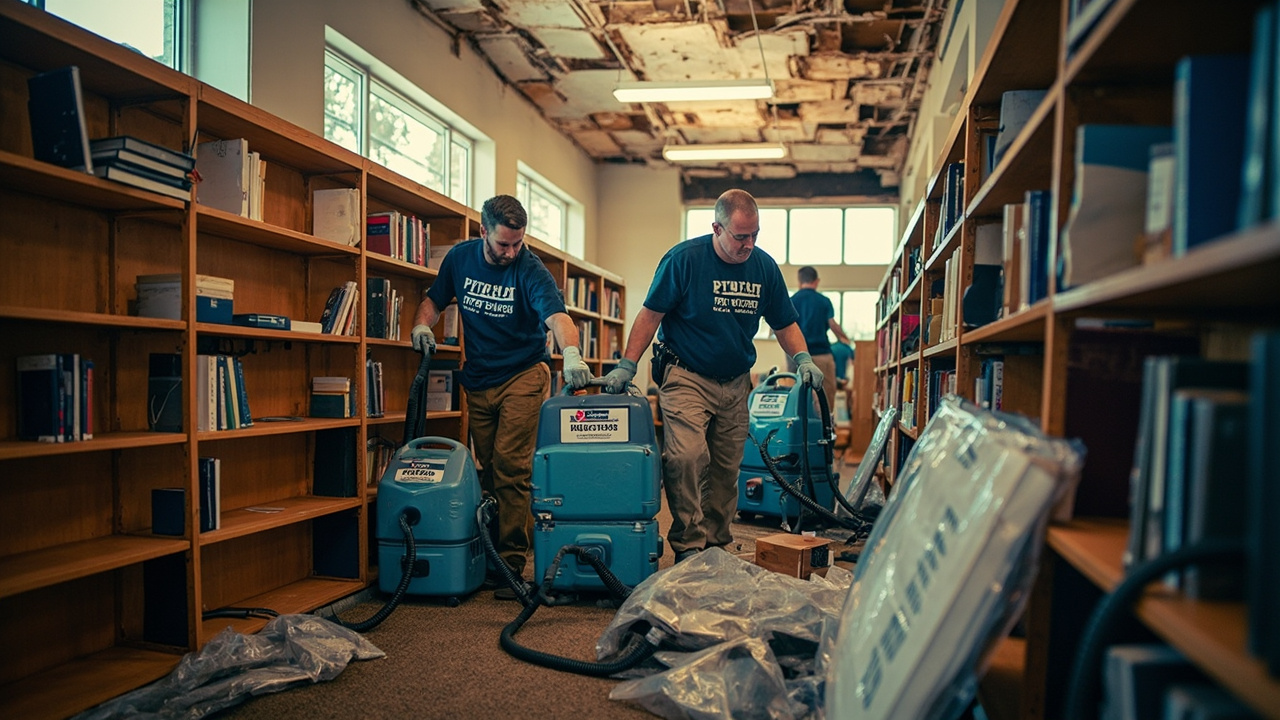
We deploy truck-mounted extractors that remove standing water at rates exceeding 200 gallons per minute. This extraction speed prevents secondary damage to flooring systems and reduces drying time by 40 percent compared to portable units. For multi-story academic buildings, we establish negative air pressure zones that prevent moisture migration between floors and contain affected areas.

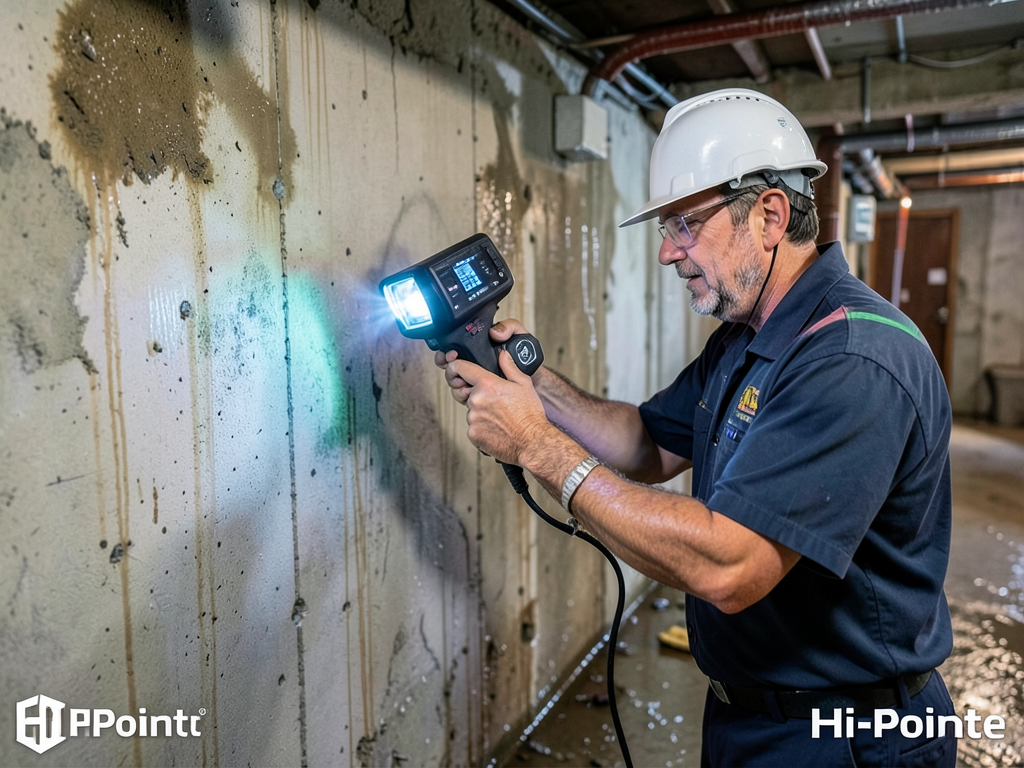
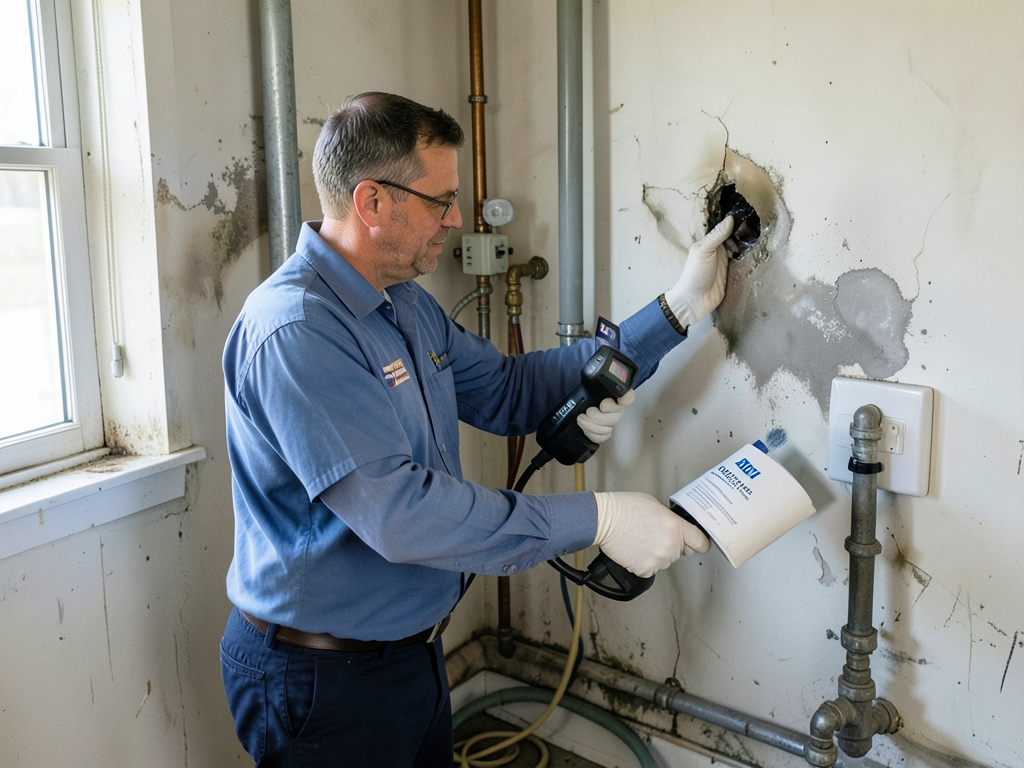
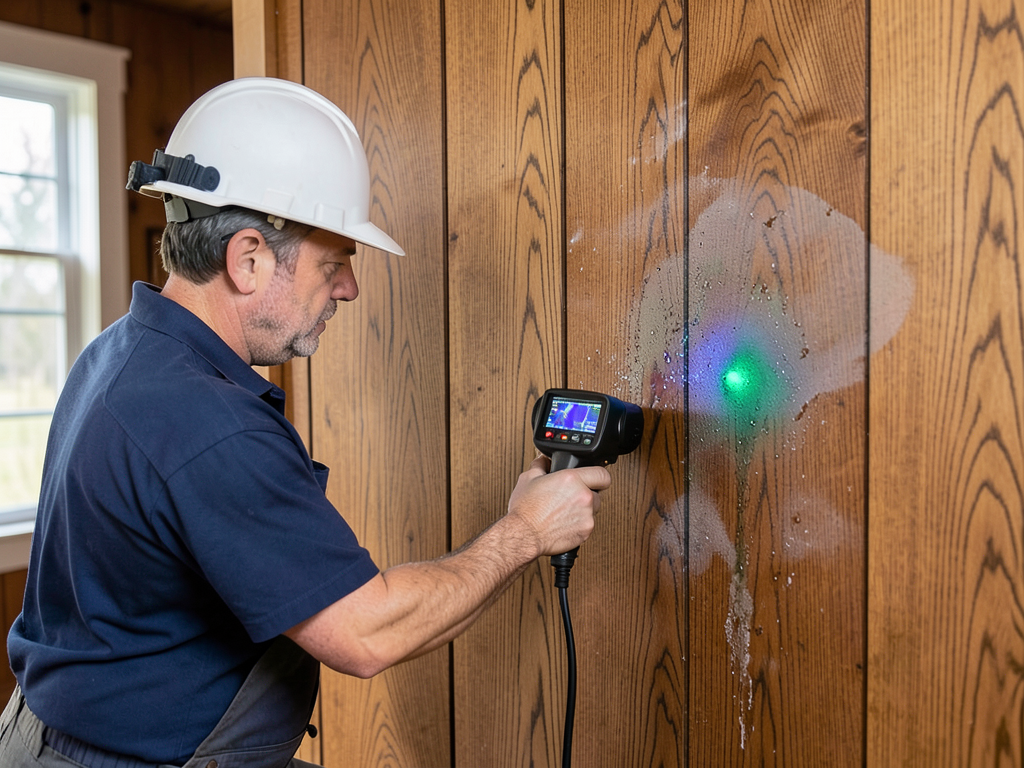
Thermal imaging surveys map hidden moisture in wall cavities and ceiling plenums where visual inspection fails. We document moisture readings at studs, baseboards, and subfloors to create drying baselines. This data drives equipment placement decisions for commercial dehumidifiers and air movers sized to building cubic footage, not generic square footage estimates.

College campus water remediation often involves coordinating with facilities management teams to maintain partial building operations during restoration. We establish containment barriers using fire-rated temporary walls that allow adjacent classrooms or offices to function while affected zones undergo drying and reconstruction. This phased approach minimizes displacement and preserves revenue-generating activities.

Our technicians apply antimicrobial treatments to all affected surfaces before reconstruction begins. This step prevents mold colonization in the 24 to 48-hour window when spores germinate. For spaces housing immunocompromised populations or food service operations, we verify surface cleanliness through third-party ATP testing that confirms sanitation to health department standards.

Documentation packages include photographic evidence, moisture logs, and equipment placement diagrams that support insurance claims and satisfy risk management requirements for institutional policies.

How Campus Restoration Projects Unfold

School & University Restoration in St. Louis – Minimize Downtime and Protect Your Institution's Mission
01

Emergency Mobilization and Containment

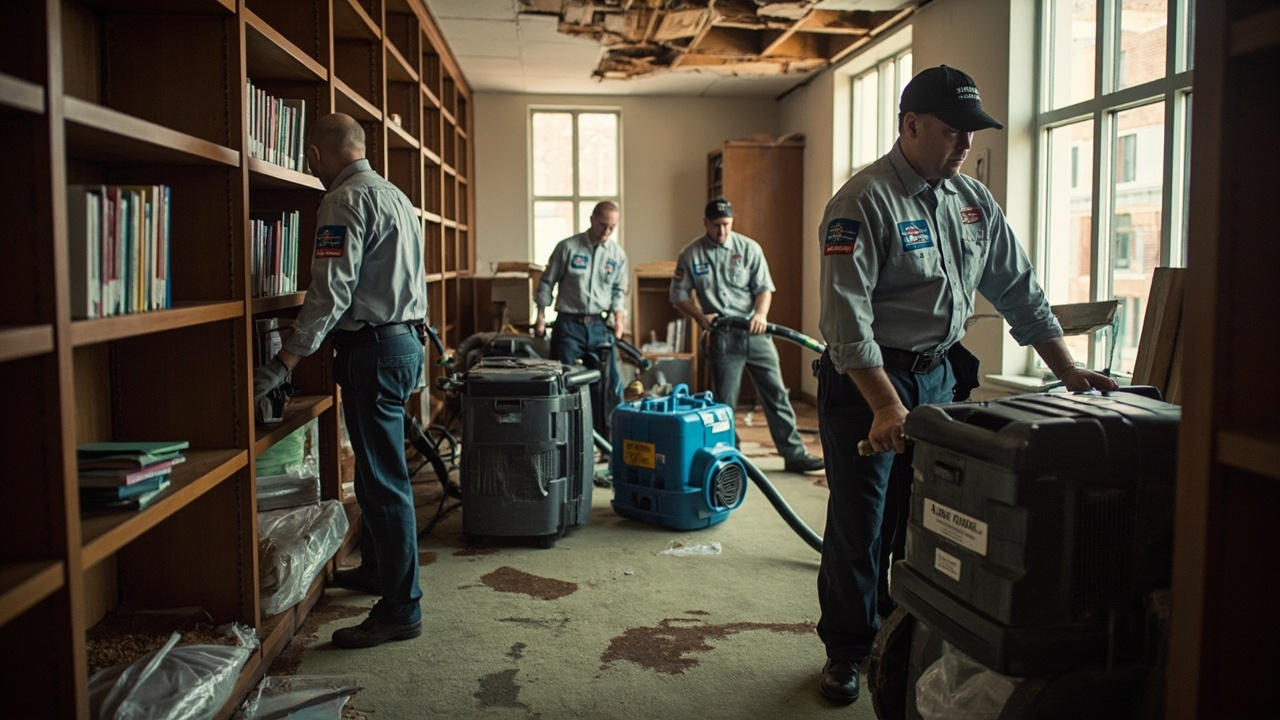
Within two hours of your call, our crew arrives with truck-mounted extraction equipment and begins water removal while simultaneously establishing containment zones. We coordinate with campus security for after-hours access and work with facilities teams to identify utility shutoffs. This immediate response prevents water from spreading to unaffected wings and limits the restoration footprint. Our project manager conducts a walk-through with your risk management team to document pre-loss conditions and establish communication protocols for the duration of the project.
02

Controlled Drying and Monitoring

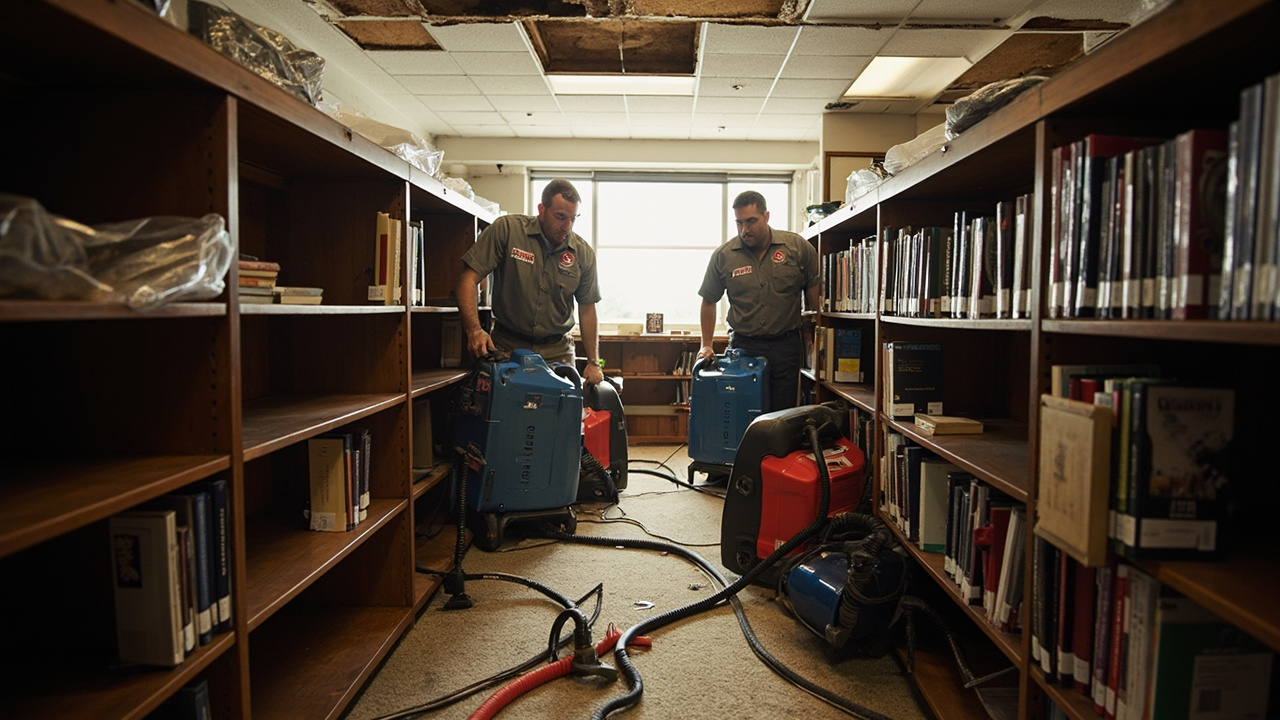
Commercial dehumidifiers and air movers run continuously under daily monitoring to achieve target moisture content in structural materials. We take readings twice daily at marked locations and adjust equipment based on drying curves. For occupied buildings, we schedule noisy equipment operation during low-traffic hours and provide noise barriers for adjacent classrooms. This phase typically requires 72 to 96 hours depending on materials affected and ambient conditions. Our technicians communicate progress updates to facilities management teams and adjust schedules around academic calendars to minimize disruption.
03

Reconstruction and Clearance Testing

Once moisture readings reach acceptable levels, reconstruction begins with antimicrobial-treated materials and finishes that match existing specifications. We source materials approved by your procurement department and schedule work to avoid peak occupancy periods. Final clearance testing includes air quality sampling and surface verification to confirm spaces meet health standards. You receive a comprehensive project binder with all documentation, certificates of completion, and maintenance recommendations. This package satisfies insurance requirements and provides liability protection for institutional records.

Why St. Louis Institutions Choose Patriot Water Damage Restoration

Educational facilities cannot afford learning curves with restoration contractors. Patriot Water Damage Restoration St. Louis brings commercial project experience that understands institutional constraints and compliance obligations specific to academic environments.

We maintain relationships with St. Louis-area building inspectors and understand municipal code requirements for occupied educational buildings. When restoration involves structural modifications or mechanical system repairs, we coordinate permit applications and inspections that keep projects on schedule. Our familiarity with St. Louis City and County inspection protocols eliminates delays that occur when contractors unfamiliar with local jurisdictions navigate approval processes for the first time.

Our equipment inventory includes commercial-grade units capable of handling large-volume incidents without mobilizing resources from other markets. This local capacity means your project receives dedicated equipment rather than shared resources that get pulled to higher-priority jobs. We staff projects with technicians who hold IICRC certifications in commercial drying and maintain background clearances required for campus access.

School disaster recovery services demand sensitivity to operational continuity. We work with academic calendars to phase restoration around breaks and schedule disruptive work during summer sessions when occupancy drops. This planning minimizes student displacement and preserves the educational mission that drives your institution.

Our project managers communicate through institutional channels your team prefers, whether that means daily email updates to facilities directors, weekly progress meetings with risk management committees, or real-time coordination through your work order system. This integration reduces administrative burden on your staff.

For institutions with self-insured retention programs or high deductibles, we provide detailed cost breakdowns that support internal budget approvals and create transparent documentation for board reporting requirements.

What Your Institution Can Expect

Response Time and Availability

Our emergency dispatch operates 24 hours daily with crews on standby for institutional clients. You reach a project manager directly, not an answering service. We arrive on-site within two hours for St. Louis metro locations and begin mitigation immediately. For after-hours incidents, we coordinate with campus security and facilities on-call staff to gain building access without delays. Weekend and holiday incidents receive the same priority as weekday emergencies. Our rapid response prevents water from spreading beyond the initial affected area and reduces overall restoration costs by limiting secondary damage to building systems and contents.

Damage Assessment and Scope Development

Within four hours of arrival, you receive a preliminary damage assessment with recommended mitigation steps and estimated project duration. Our project manager walks your facilities team through affected areas and explains restoration protocols in non-technical terms. We use thermal imaging and moisture meters to identify hidden damage that visual inspection misses. This assessment includes photos, floor plans marking affected zones, and equipment lists. For insurance claims, we provide detailed documentation that supports your adjuster's evaluation and expedites approval. The assessment identifies any code compliance issues that reconstruction must address and flags potential hazards like asbestos-containing materials in older campus buildings.

Restoration Quality and Standards

Reconstruction restores spaces to pre-loss condition using materials that match existing finishes and meet current building codes. We source materials through institutional purchasing agreements when applicable and provide product specifications for approval before installation. All work meets IICRC S500 standards for water damage restoration and follows manufacturer guidelines for installed systems. Final spaces pass air quality testing and receive certificates of completion suitable for occupancy permits. We coordinate final inspections with municipal authorities and provide documentation that satisfies risk management requirements. Spaces return to service ready for immediate occupancy without lingering odors or moisture concerns that could affect indoor air quality.

Post-Restoration Support and Documentation

You receive a comprehensive project binder containing all documentation, including initial assessment photos, daily moisture logs, equipment placement diagrams, air quality test results, and certificates of completion. This package provides liability protection and satisfies insurance carrier requirements for institutional policies. We remain available for questions during the warranty period and provide maintenance recommendations to prevent future incidents. For institutions developing emergency response plans, we offer facility assessments that identify vulnerabilities and recommend preventive measures. Our team trains your facilities staff on early warning signs of water intrusion and proper initial response steps that minimize damage before professional crews arrive.

Frequently Asked Questions

You Have Questions,
We Have Answers

How St. Louis's Aging Campus Infrastructure Increases Restoration Complexity

Many St. Louis educational institutions occupy buildings constructed between 1900 and 1960, when plumbing systems used galvanized steel pipes now approaching end-of-service life. Washington University's Danforth Campus, Saint Louis University's Midtown location, and numerous elementary schools in the city's historic neighborhoods operate with infrastructure that predates modern building codes. These aging systems create cascading failure risks where one pipe break triggers pressure surges that compromise adjacent lines. University flood cleanup services in St. Louis must account for hidden damage in wall cavities where decades of minor leaks have degraded framing members and created ideal conditions for mold growth behind finished surfaces.

St. Louis building codes require restoration contractors working on institutional projects to carry higher liability limits than residential work and maintain specific endorsements for pollution liability coverage. Projects affecting buildings listed on the National Register require coordination with preservation officers and may mandate specialized restoration techniques that preserve historic fabric. Our team maintains relationships with St. Louis City and County inspectors who oversee institutional projects and understands approval processes that expedite permit issuance. This local knowledge prevents compliance delays that extend project timelines and increase costs for institutions already managing budget constraints and operational disruptions.
Water Damage Restoration Services in The St. Louis Area

We are proud to be the trusted local choice for water damage restoration across the greater St. Louis region. This map highlights our primary service zone, demonstrating our commitment to rapid, localized response across every neighborhood and business district within the area. We invite all users to view our service area and then contact us directly for immediate deployment to your specific address within the St. Louis community.

Address:
Patriot Water Damage Restoration St. Louis, 710 N Tucker Blvd, St. Louis, MO, 63101

Additional Services We Offer

Our news updates

Latest Articles & News from The Blogs

What to Do When Your Water Softener Leaks and Floods Your Affton Utility Room A leaking water softener can release…

What to Do When Your Water Softener Leaks and Floods Your Affton Utility Room

What to Do When Your Water Softener Leaks and Floods Your Affton Utility Room A leaking water softener can release…

Restoring a Water Damaged Mid-Century Modern Home in Warson Woods

Restoring a Water Damaged Mid-Century Modern Home in Warson Woods Water damage in a mid-century modern home requires specialized knowledge…

Why Your Walk-Out Basement in Hi-Pointe is Vulnerable to Heavy Rain Runoff

Why Your Walk-Out Basement in Hi-Pointe is Vulnerable to Heavy Rain Runoff Your walk-out basement in Hi-Pointe faces unique flooding…

Contact Us

Water damage threatens your educational mission and creates liability exposure that compounds with every hour of delay. Call (314) 428-9977 now for immediate dispatch and expert restoration that minimizes downtime and protects your St. Louis campus.